Honor Launches X7e Smartphone in Russia Featuring 7200mAh Battery and AI Shortcut Button
July 21, 2026
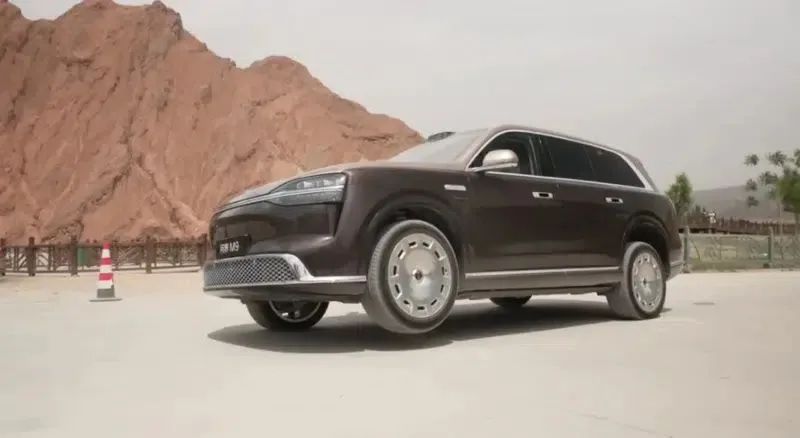
Chinese automotive manufacturers are pushing the boundaries of vehicle technology with new advancements enabling cars to continue driving on three wheels and facilitating tire changes without a traditional jack. This development builds on earlier innovations involving active suspension systems designed to control the relative positioning of wheels and the car body to enhance safety and performance.
The foundation for this technology was laid by the automaker BYD, which introduced an active suspension system capable of selectively managing the relationship between the wheels and the vehicle chassis. Initially, this allowed vehicles to maintain mobility after a tire puncture by supporting weight distribution across the remaining three wheels. This ability reduces the risk associated with sudden tire failures by enabling drivers to keep moving safely to a repair location.
Building on this concept, Chinese manufacturers are now leveraging similar suspension technologies to simplify and expedite tire replacement processes. Typically, changing a tire requires the use of a mechanical jack to lift the vehicle off the ground, a task that involves physical effort and safety concerns. The new approach employs the active suspension system to raise the car at the required wheel directly, eliminating the need for external jacks.
This innovation not only reduces the time and effort needed for tire changes but also enhances convenience, especially in emergency road situations or locations lacking proper facilities. By automating the lifting process through the vehicle’s own suspension, drivers can perform tire replacements more efficiently and with greater safety.
These advancements reflect a growing trend among Chinese auto manufacturers to integrate intelligent mechanical solutions that improve both vehicle resilience and user experience. The move towards jack-free tire changing systems complements the broader industry push for smarter, safer, and more adaptable cars.
While further details on the widespread application and commercial rollout of this technology remain limited, the progress highlights significant strides in automotive engineering. Innovations like these are expected to influence future vehicle design standards, particularly in enhancing maintenance convenience and managing unforeseen road challenges.
As the industry continues to evolve, these developments demonstrate how active suspension systems can extend beyond handling and ride comfort to include new functions that reimagine vehicle utility. Chinese automakers’ efforts in this area indicate a promising direction toward more self-sufficient and user-friendly vehicles.
Chinese car makers develop technology enabling vehicles to drive on three wheels and replace tires without a jack, enhancing safety and convenience.