Oracle’s Debt Challenges Threaten AI Data Center Project for OpenAI
July 21, 2026
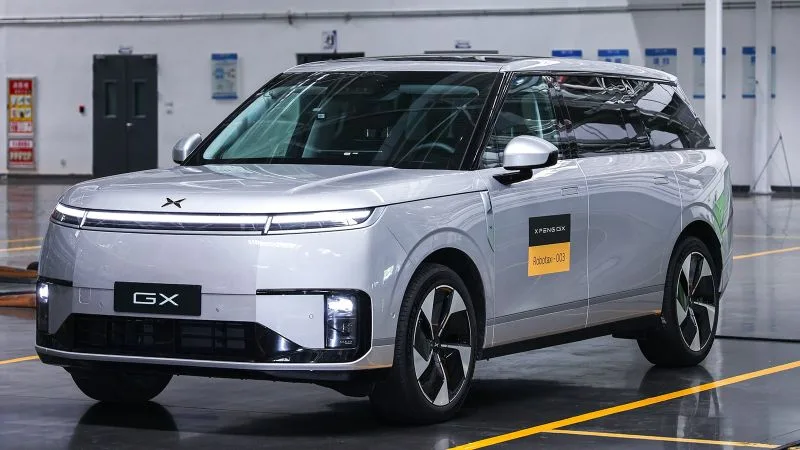
Chinese electric vehicle manufacturer Xpeng has officially launched the mass production of robotaxis developed entirely on a domestic platform. This milestone positions Xpeng as potentially the first company to move beyond prototype stages and into commercial-scale manufacturing of autonomous taxis in China.
While American company Waymo operates nearly 3,800 self-driving taxis across the United States, these vehicles are still classified as prototypes rather than production models. This distinction has left room for competitors to claim leadership in serially producing autonomous passenger vehicles. Xpeng’s recent announcement underscores its confidence in its homegrown technology and its readiness to deploy robotaxi services on a broad scale within China.
With mass production underway, Xpeng plans to commence regular passenger transport using its robotaxi fleet starting next year. The effort leverages an entirely Chinese-developed platform, signaling significant progress in the domestic autonomous driving technology sector. This development is notable in the context of intense global competition to perfect and commercialize driverless taxi services.
The company’s initiative reflects broader trends within the automotive and tech industries to transition autonomous vehicles from experimental fleets toward operational public transit systems. By integrating advanced artificial intelligence and sensor technologies tailored to local regulations and road conditions, Xpeng aims to provide a reliable and scalable robotaxi offering.
Currently, detailed specifications, pricing, and deployment scales have not been publicly released. However, Xpeng’s commitment to beginning routine passenger operations next year suggests a high level of testing and readiness.
This advancement also spotlights China’s strategic emphasis on self-reliance in critical technology sectors, with fully domestic platforms reducing dependency on foreign components and intellectual property. The robotaxi initiative aligns with broader national goals to lead the autonomous vehicle industry globally.
As commercial robotaxi services begin to materialize in China, the progress may influence competitive dynamics worldwide, potentially reshaping how urban mobility is approached and implemented across diverse markets. Industry observers will be watching to see how Xpeng’s rollout unfolds relative to ongoing deployments by competitors in other regions.
Chinese automaker Xpeng has initiated large-scale production of robotaxis built on a fully domestic platform, aiming for regular passenger service next year.