Honor Launches X7e Smartphone in Russia Featuring 7200mAh Battery and AI Shortcut Button
July 21, 2026
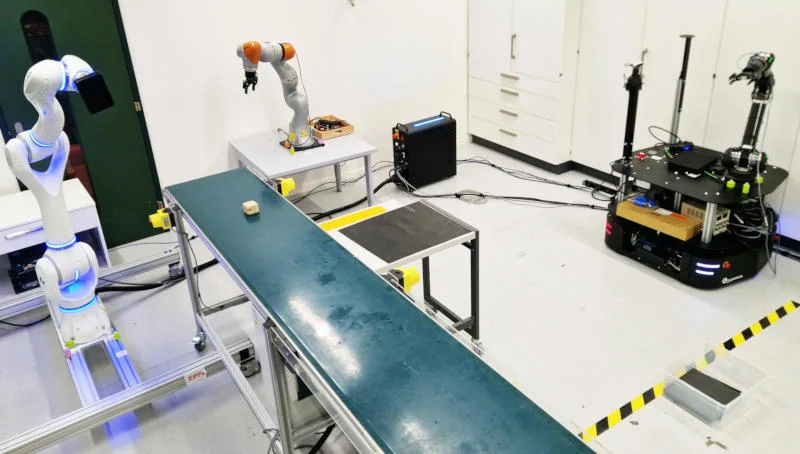
Engineers at the École Polytechnique Fédérale de Lausanne (EPFL) in Switzerland have introduced a novel approach that allows robots to learn human skills by merely observing people perform tasks. This advancement marks a significant step in the domain of robotic learning, where programming robots to replicate complex human actions has traditionally posed challenges due to structural differences between robots and humans.
Human beings often acquire new abilities by watching others, a method that can also extend, in some cases, to learning from animals. In contrast, while robots can be pre-programmed with specific sequences of movements, enabling them to imitate the nuanced skills demonstrated by humans is considerably more complex. This complexity arises because robots possess diverse physical configurations compared to the human body, making direct replication difficult.
The team at EPFL tackled this issue by developing a system where robots analyze human actions through observation, process the learned information, and adapt it to their unique mechanical structures. This approach allows robots to internalize the essence of human movements rather than simply copying the motions in an identical fashion.
The method integrates advanced machine learning algorithms that map human gestures onto robot-specific movements. By doing so, the robots can perform tasks with a level of dexterity and coordination that closely resembles that of the observed human operators, despite having different joint arrangements or limb functionalities.
This innovation holds promise for advancing the capabilities of robots across a variety of applications—ranging from industrial automation to service robots operating alongside humans. By enabling robots to learn in a manner similar to humans, the need for extensive manual programming is reduced, potentially accelerating deployment and improving flexibility in complex environments.
Although details such as commercial availability, pricing, or implementation timelines were not disclosed, the research from EPFL highlights a meaningful leap toward more intuitive and adaptive robotic systems. As robots become more capable of acquiring skills from observation, their integration into everyday human activities and workspaces could become increasingly seamless.
Researchers at EPFL have created a method enabling robots to acquire human skills simply by watching, overcoming differences in robotic structures.