TSMC Plans $265 Billion Investment to Expand U.S. Chip Manufacturing Amid Rising Competition
July 20, 2026
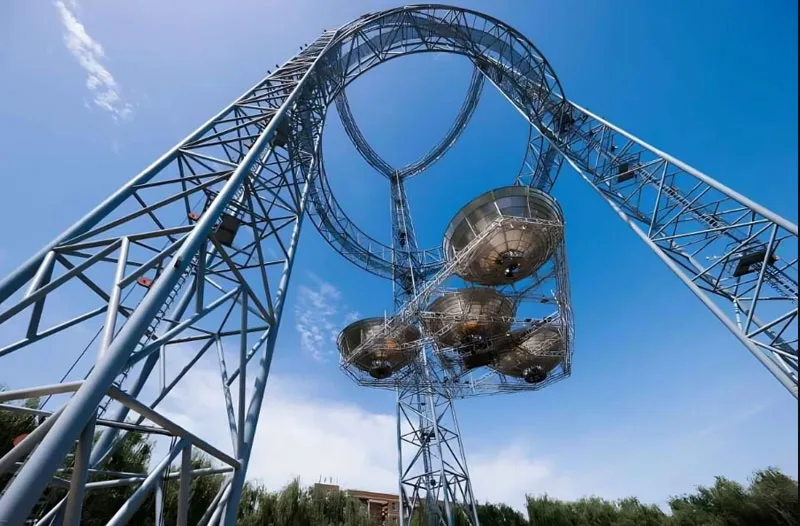
Chinese scientists have reached a significant milestone by successfully supplying power to multiple moving airborne targets simultaneously through a microwave beam. This development marks the first time such a feat has been recorded in history, showcasing an advancement that could reshape how energy is transmitted to aerial and orbital platforms.
The experiment ties into ongoing global research efforts investigating the collection of solar energy in Earth’s orbit for use on the ground. Space-based solar power has garnered renewed interest due to the evolving needs of orbital data centers and the increasing deployment of satellites with higher power requirements.
As the number of space-based assets expands, the ability to deliver consistent wireless power is becoming crucial. The experimental success in China demonstrates practical steps toward achieving efficient energy transfer methods that can support satellites and potentially orbital server farms without relying solely on onboard solar panels or limited battery reserves.
Researchers emphasize that orbit-collected solar energy could serve as a persistent and reliable power source for diverse applications, ranging from individual spacecraft to large-scale orbital infrastructure. The recent breakthrough involving microwaves adds tangible progress to these ambitions by enabling power delivery to multiple targets in motion, a challenging task given the need for precise beam targeting and energy control.
Although detailed technical specifications and commercial plans have not been disclosed, this demonstration underlines the potential for microwave transmission technology to play a central role in future space operations. It complements broader efforts to harness renewable energy from space, reducing dependence on terrestrial resources and opening avenues for more autonomous, sustainable mission architectures.
Further testing is anticipated to validate and refine this approach, leading to scalable implementations that could benefit both spaceborne installations and aerial platforms within Earth’s atmosphere. This achievement not only symbolizes a step forward for wireless power transfer but also signals a strategic focus on integrating solar energy solutions into the fabric of space industry development.
Chinese scientists achieved a milestone by powering several airborne moving targets simultaneously via a microwave beam.