Oracle’s Debt Challenges Threaten AI Data Center Project for OpenAI
July 21, 2026
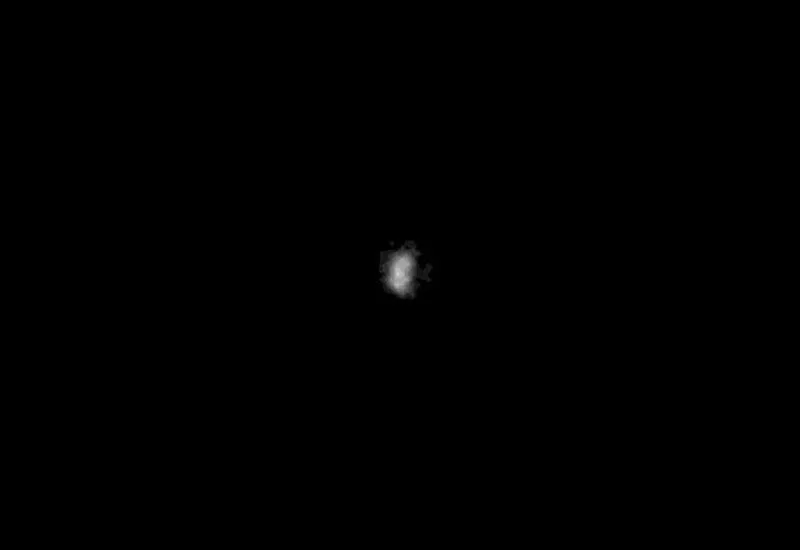
New insights into the origins of Neptune’s moon Nereid challenge previous assumptions about its formation. According to a study published in the journal Science Advances, Nereid is likely a primordial satellite that formed alongside Neptune, rather than being a captured object from the Kuiper Belt, a distant region filled with icy bodies beyond Neptune’s orbit.
Until now, the origin of Nereid—one of Neptune’s irregular moons—has been uncertain. Its highly elliptical orbit prompted speculation that it might have been captured from the Kuiper Belt, a vast expanse of space inhabited by remnants from the solar system’s formation. However, recent spectral data collected by NASA’s James Webb Space Telescope (JWST) offers compelling evidence that Nereid’s composition differs significantly from typical Kuiper Belt objects.
The research team analyzed surface materials on Nereid, finding unique chemical and physical signatures that do not align with those of Kuiper Belt bodies. This suggests that Nereid was part of Neptune’s original satellite system, surviving through the solar system’s formative and chaotic era rather than being gravitationally snatched from the outer reaches of the solar system later on.
Identifying Nereid as an original moon helps scientists better understand the evolutionary history of the Neptunian system, which includes both regular moons formed directly from the circumplanetary disk and irregular satellites likely captured afterward. Nereid’s unusual orbit and composition may provide new clues about the processes that shaped the early solar system and planetary satellite formation.
The findings also underscore the value of the James Webb Telescope’s advanced infrared capabilities, which allow researchers to study the detailed surface compositions of distant celestial objects more precisely than previously possible. These capabilities are critical for distinguishing native moons from captured objects based on their surface characteristics and formation history.
While further observations and analyses are needed to confirm these initial conclusions and explore other irregular moons around Neptune, this discovery represents a significant step forward in unraveling the complex origins of the solar system’s outer satellites.
Research using NASA’s James Webb Telescope indicates Neptune’s moon Nereid likely formed with the planet, not captured from the Kuiper Belt.