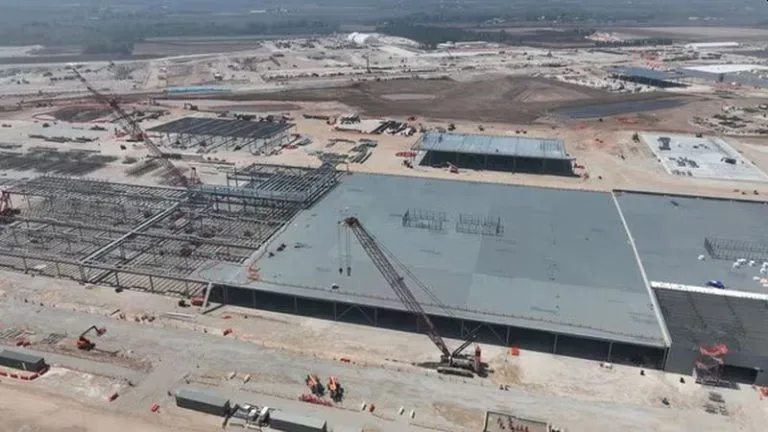
Oracle’s Debt Challenges Threaten AI Data Center Project for OpenAI
July 21, 2026
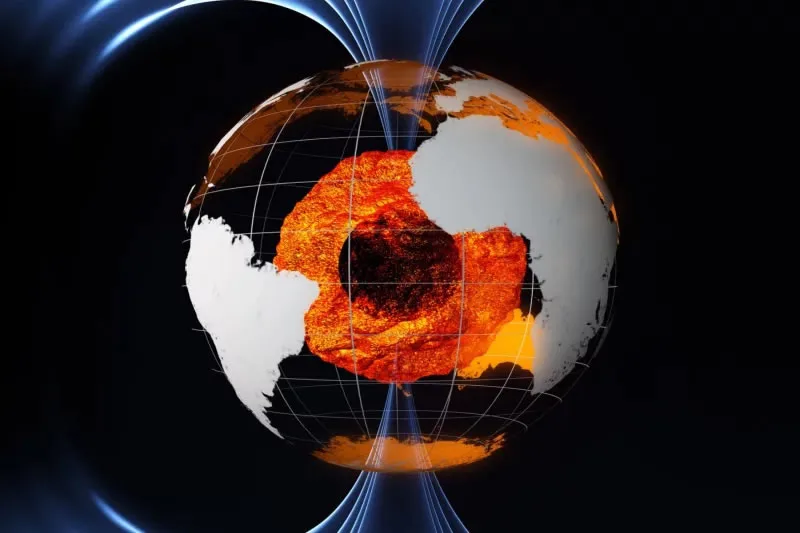
Recent analyses of geomagnetic observations combined with satellite data have shed new light on significant changes occurring deep within Earth’s outer core. Researchers have identified a major alteration in the flow direction beneath the equatorial Pacific region beginning around 2010. This shift is tied fundamentally to internal geodynamic processes rather than external factors.
The outer core, a fluid layer of molten iron and nickel encasing the inner core, plays a critical role in generating Earth’s magnetic field through complex convective motions. By examining geomagnetic records spanning nearly three decades—from 1997 through to 2025—scientists observed an unusual reversal in the flow patterns of this outer core region, particularly beneath the Pacific Ocean near the equator.
This discovery relied on integrating diverse datasets including terrestrial geomagnetic measurements and advanced satellite missions designed to monitor Earth’s magnetic environment. Such combined observations enable unprecedented detail in tracking the subtle but significant shifts in core dynamics affecting the planet’s magnetic behavior.
According to the study, the large-scale flow reversal is closely connected with internal processes far beneath the surface. These include interactions within Earth’s deep interior that influence how the molten metals move, which in turn impacts the geomagnetic field detected at the surface and in near-Earth space.
While the phenomenon was first detected starting in the early 2010s, continued monitoring suggests that this is not necessarily a permanent change. The data imply that the flow alteration might represent a temporary fluctuation rather than a lasting transformation in the outer core dynamics. Such transitory behavior could have implications for understanding the variability of Earth’s magnetic field over short timescales.
Understanding these deep Earth processes remains challenging due to the inaccessibility of the planet’s interior and the complexity of modeling fluid motions thousands of kilometers underground. Nevertheless, advances in satellite technology and geomagnetic data analysis have improved the capability to detect and interpret these geophysical phenomena.
This research contributes to a broader effort to unravel the mechanisms behind the Earth’s magnetic field variations, which are critical for navigation, satellite operations, and understanding the planet’s habitability. The findings underscore the dynamic nature of Earth’s interior and highlight the importance of long-term monitoring to accurately assess changes in the geomagnetic environment.
Future studies will aim to clarify the duration and potential implications of this outer core flow reversal, as well as its possible connections to broader geodynamic and geomagnetic events. This ongoing work continues to refine the scientific understanding of how Earth’s deep interior evolves and how these subterranean processes impact the planet’s magnetic shield.
New research indicates a major shift in Earth’s outer core flow starting in 2010 could be a temporary event linked to deep planetary dynamics.