App Store Sees Surge in New Apps Amid Growth of No-Code Platforms in Early 2026
July 21, 2026
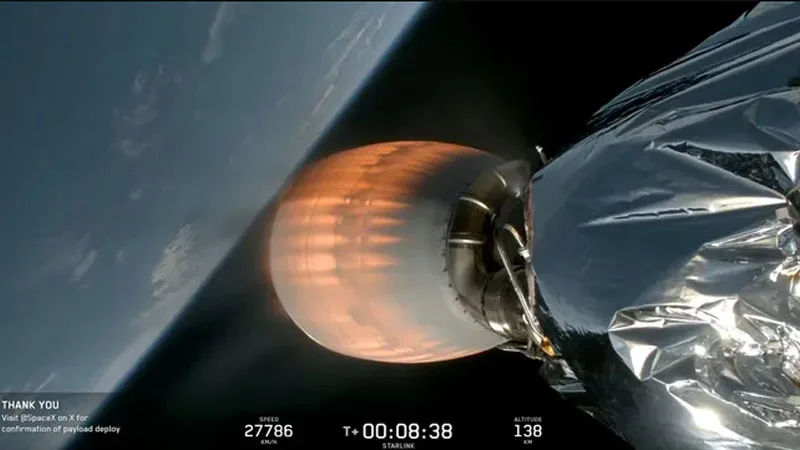
SpaceX has temporarily suspended launches of its Falcon 9 rocket following a malfunction involving the vehicle’s upper stage during a routine deployment mission. The incident occurred on February 2, 2026, after a Falcon 9 successfully launched 25 Starlink satellites into orbit from the Vandenberg Space Force Base in California.
While the initial phase of the mission proceeded nominally, with the payload deploying as planned, the upper stage failed to perform its intended controlled deorbit maneuver. Typically, the upper stage of Falcon 9 is designed to re-enter Earth’s atmosphere and burn up safely, minimizing space debris. However, in this instance, the stage did not execute the expected deorbit burn, leading to concerns about the anomaly’s underlying cause.
The failure of the Falcon 9 upper stage to follow its expected trajectory outside the primary mission parameters has prompted SpaceX to pause all subsequent Falcon 9 flights pending a thorough investigation. Understanding the root cause of this event is critical to ensuring flight safety and mission reliability going forward.
This pause particularly impacts upcoming missions, including the Crew-12 mission bound for the International Space Station (ISS). The Crew-12 flight, which depends on Falcon 9 as its launch vehicle, now faces uncertainty until SpaceX completes its analysis and resolves the issue.
SpaceX has not disclosed further technical details about the failure or provided an estimated timeline for the resumption of Falcon 9 launches. The pause reflects aviation and aerospace industry norms to suspend flight operations when anomalies arise that could potentially compromise vehicle performance or safety.
The incident highlights the challenges of operating complex rocket systems and managing orbital debris risks. Controlled deorbit of spent rocket stages is crucial to maintaining sustainability in Earth’s orbital environment. Any deviation from planned disposal procedures can increase hazards in space traffic management.
Despite the setback, SpaceX has built a substantial track record for rapid turnaround and responsiveness to technical issues in its launches. Analysts and industry observers will be closely monitoring the company’s progress in diagnosing and correcting the upper stage issue as it works to maintain its launch cadence and commitments.
The significance of Falcon 9 to SpaceX’s business and NASA collaborations underscores the importance of swiftly addressing any reliability concerns. Falcon 9 remains one of the most frequently flown and commercially successful rockets in operation, supporting satellite constellations, cargo, and crew missions.
As investigations proceed, future details on the cause of the anomaly and corrective measures will be critical to restoring confidence in Falcon 9 operations and minimizing disruptions to space access schedules.
SpaceX suspends Falcon 9 flights after an upper stage failure during a recent Starlink deployment, putting upcoming missions at risk.