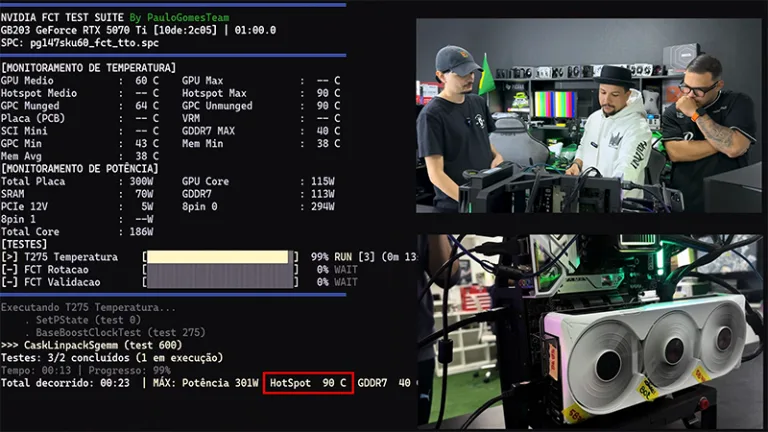
Nvidia GPUs Can Report Individual GDDR6 and GDDR6X Memory Chip Temperatures, Enthusiasts Discover
July 19, 2026

A recent study conducted by researchers at the Karlsruhe Institute of Technology (KIT) has uncovered a technique capable of identifying individuals through passive analysis of wireless signals within Wi-Fi networks. This innovative approach does not require subjects to possess any Wi-Fi enabled devices, nor does it depend on specialized hardware.
The method exploits commonly available Wi-Fi devices exchanging data in close proximity to the target, serving as unintentional sensors. By monitoring and interpreting these ambient radio signals, the technique can uniquely recognize people based on their interaction with the wireless environment.
The findings raise significant concerns surrounding privacy in increasingly connected spaces. Unlike conventional tracking systems that depend on active devices or dedicated equipment, this passive surveillance mechanism can potentially operate undetected, effectively transforming existing Wi-Fi infrastructure into a widespread monitoring network.
As Wi-Fi becomes more ubiquitous and integrated into everyday environments, the risk of covert identification and tracking escalates. This evolution poses challenges for both consumers and developers, particularly regarding the safeguarding of personal data and user anonymity.
Experts suggest that these revelations call for a comprehensive review and enhancement of security protocols within the development of upcoming wireless communication standards. Securing Wi-Fi technologies against misuse will be crucial to prevent unauthorized surveillance and to uphold digital privacy rights.
The KIT study underscores the need for continued research into defending wireless networks from emerging threats. Striking a balance between connectivity benefits and privacy protections remains a critical priority for the technology industry moving forward.
Scientists at KIT reveal a method to identify individuals via passive Wi-Fi signal analysis, raising privacy concerns over future wireless standards.