Northwestern University Develops Nearly Invisible Spinning Drone
July 21, 2026
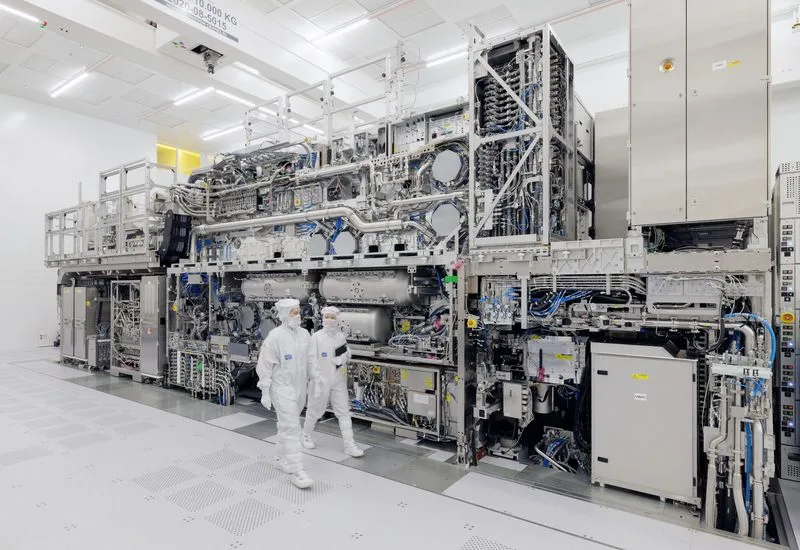
Taiwan Semiconductor Manufacturing Company (TSMC) has acquired High Numerical Aperture (High-NA) Extreme Ultraviolet (EUV) lithography equipment but has yet to commit to using these advanced tools for mass production of chips. This cautious stance contrasts with the more publicized approach taken by Intel, which openly showcased its procurement of similar technology.
EUV lithography represents a critical advancement in semiconductor manufacturing, enabling the patterning of circuits at smaller scales and improved precision. High-NA EUV systems, an enhanced iteration of existing EUV machines, promise even greater resolution and throughput capabilities, positioning them as key assets for future semiconductor nodes.
Intel’s acquisition of High-NA EUV lithography scanners from ASML has been widely reported, signaling the company’s intentions to integrate this new technology into its production processes. Meanwhile, TSMC, the world’s largest semiconductor foundry, has also secured these next-generation lithography tools but remains cautious regarding their immediate deployment in volume manufacturing.
Industry analysts view TSMC’s approach as a measured assessment of the technology’s readiness and cost-effectiveness for large-scale chip fabrication. While TSMC is actively experimenting with High-NA EUV systems, the company has yet to announce plans for full integration into its production lines. This strategy may reflect concerns over yield optimization, equipment scalability, or the economics of adopting cutting-edge lithography at this stage.
The deliberate pace taken by TSMC could influence broader industry dynamics, given its sizable share of the global foundry market and its role in producing chips for diverse technology sectors. The adoption timeline of High-NA EUV lithography is anticipated to shape the competitive landscape among semiconductor manufacturers as they push toward smaller process nodes and enhanced chip performance.
As High-NA EUV tools continue to undergo refinement and testing, TSMC’s eventual deployment decisions will be closely watched by industry stakeholders. Their experience may provide valuable insights into the operational challenges and benefits of integrating this technology into mainstream semiconductor manufacturing.
TSMC has purchased High-NA EUV lithography machines but remains cautious about deploying them in large-scale chip manufacturing.