Oracle’s Debt Challenges Threaten AI Data Center Project for OpenAI
July 21, 2026
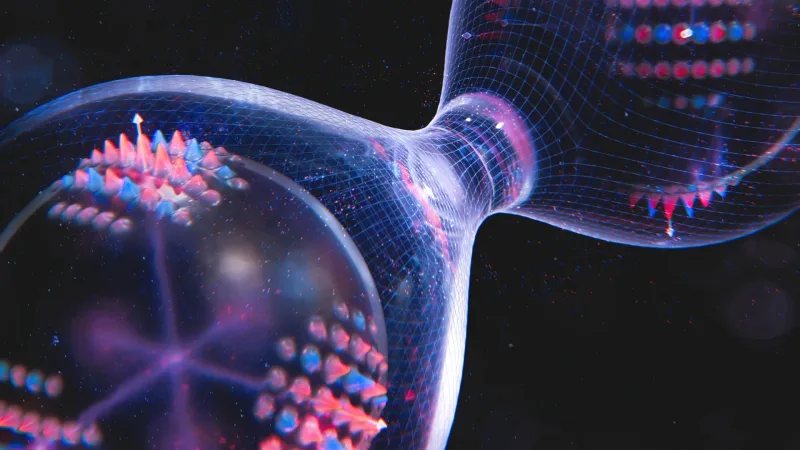
Quantum computing continues to hold significant promise for transforming industries ranging from cryptography to materials science. However, the field still faces a major hurdle: managing the swift accumulation of errors during quantum computations. This challenge complicates efforts to fully harness the capabilities of quantum machines, which have yet to reach the stage of reliable maturity.
Quantum computers operate using quantum bits, or qubits, which can exist in multiple states simultaneously. While this property enables powerful new kinds of computation, qubits are notoriously fragile. They are highly susceptible to various forms of noise and interference from their environment, leading to rapid error buildup inside quantum algorithms.
Unlike classical computers, where error rates can be reduced to negligible levels, quantum processors require sophisticated error correction mechanisms that can detect and fix errors without destroying the quantum information itself. Developing these methods is a complex technical challenge, requiring innovations in both hardware design and algorithm development.
Recent advances show that engineers and scientists remain determined to overcome these obstacles. Various quantum error correction codes and techniques are being refined to suppress errors more effectively. Researchers increasingly focus on fault-tolerant quantum computing architectures, which can operate accurately even when individual qubits are prone to errors.
The race to improve error correction is crucial because rapid error accumulation poses a threat to expanding the scale and complexity of quantum calculations. Without robust correction, quantum devices risk delivering unreliable results or requiring prohibitively short computation times.
Efforts in this domain also extend to optimizing physical qubit implementations, including trapped ions, superconducting circuits, and topological qubits, each presenting unique opportunities and challenges for error correction protocols.
Although practical, large-scale quantum computing remains an aspirational goal, ongoing research into quantum error correction continues to drive progress. These advances help pave the way for more stable and scalable quantum systems, bringing the technology closer to real-world applicability.
In summary, quantum error correction is a pivotal area of study as the quantum computing industry pushes forward. Despite the rapid pace at which errors can accumulate during quantum operations, determined efforts by researchers worldwide aim to mitigate these effects and unlock the transformative potential of quantum computation.
Quantum error correction remains key as researchers tackle rapid error accumulation hindering quantum computers’ progress.