
Sony Calms Backlash Over End of Disc Releases with Classic Call of Duty Ports
July 11, 2026
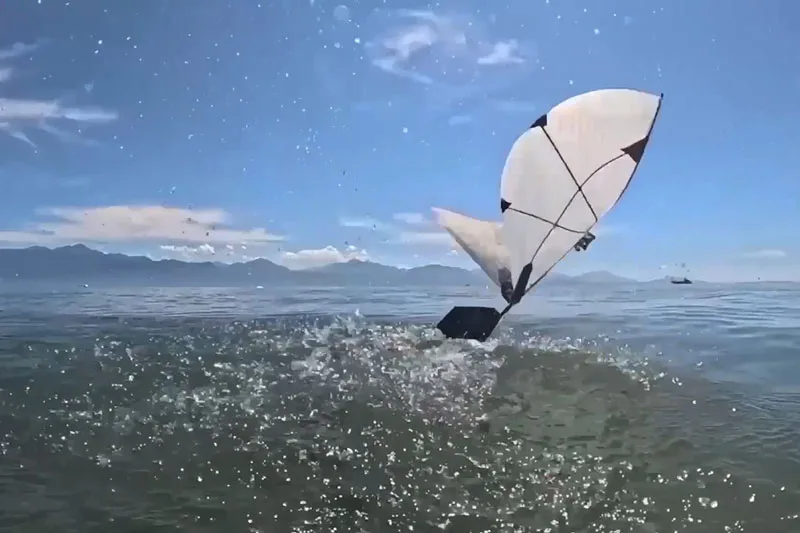
Engineers from the Massachusetts Institute of Technology (MIT) and the École Polytechnique Fédérale de Lausanne (EPFL) have jointly developed a lightweight robotic bird designed to operate both in the air and underwater. This innovation marks a significant advancement in robotic technology by enabling a single platform to seamlessly transition between flying, diving, and swimming, opening new frontiers for ocean research.
The robotic bird stands out as the first of its kind capable of not only flying but also submerging below water surfaces and taking off autonomously from water. Such multifunctionality positions it as a prototype for future compact research drones that can collect data in complex environments spanning air and sea.
Unlike conventional drones designed primarily for aerial tasks or underwater robots restricted to aquatic operations, this lightweight machine bridges both domains. Its design is expected to inspire the development of novel aerial vehicles that can operate across environmental boundaries, offering greater versatility and efficiency in scientific missions.
The collaborative effort between MIT and EPFL represents a blend of expertise in robotics, fluid dynamics, and materials science, enabling innovations in propulsion and control systems that allow the robot to maneuver effectively in air and underwater. This versatility is crucial for environmental monitoring, ecosystem studies, and other applications where interaction with both mediums is advantageous.
While specific technical specifications, pricing, and deployment timelines have not been disclosed, the project signals a notable shift toward more integrated robotic solutions for challenging and dynamic terrains. Future research platforms derived from this concept may facilitate comprehensive data acquisition, reducing the need for multiple separate devices and enhancing mission adaptability.
As ocean exploration and environmental monitoring demand increasingly sophisticated tools, the advent of a robotic bird that merges flying and swimming capabilities paves the way for greater operational scope. It holds promise for scientific communities aiming to study marine and aerial ecosystems with unprecedented agility and range.
Researchers from MIT and EPFL developed a robotic bird that can both fly and dive underwater, pioneering new possibilities for marine exploration.