
SK hynix CEO Predicts Memory Chip Shortage Will Peak in 2027 and Persist Beyond 2030
July 11, 2026
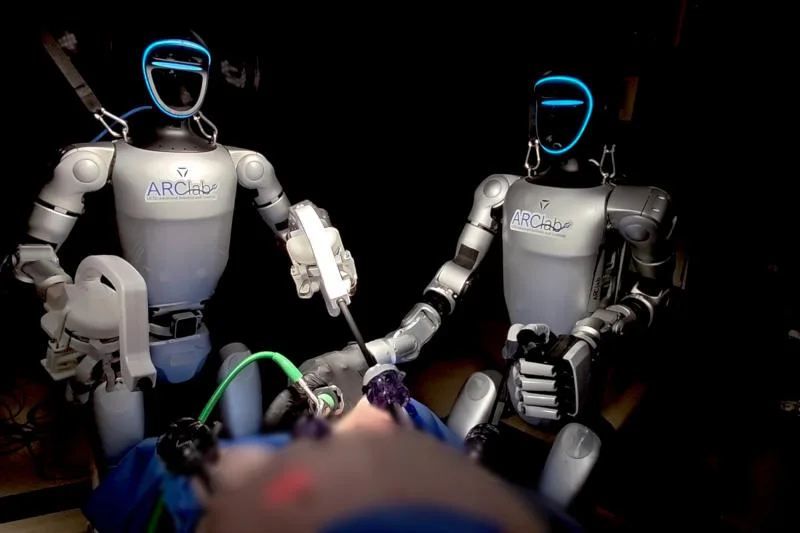
Researchers at the University of California, San Diego have demonstrated a notable advancement in robotic-assisted surgery by remotely controlling humanoid robots to perform complex medical procedures on live animals. The surgical experiment involved the Unitree G1 robots, which were guided by surgeons to successfully remove gallbladders from two live pigs.
The experiment marks a significant step forward in the application of remote-operated robotics within the field of surgery. The Unitree G1 robots, known for their human-like mobility and dexterity, were navigated from a distance by medical professionals, allowing precise manipulation required during delicate surgical interventions.
By utilizing these remotely operated robots, the team at UC San Diego was able to carry out cholecystectomy—the removal of the gallbladder—on live animal subjects. This procedure presents numerous technical challenges, including the need for fine motor control and careful handling of internal tissues, which the Unitree G1 robots successfully managed under expert human direction.
This experiment not only showcases the integration of advanced robotics and teleoperation technologies but also offers potential implications for the future of surgical procedures, particularly in scenarios where direct human intervention might be limited by distance or access. The ability to leverage humanoid robots remotely could expand surgical capabilities, improve access to specialized care, and pave the way for new medical techniques in both human and veterinary medicine.
While detailed findings and the full scope of the study have yet to be published, the use of Unitree G1 robots in live animal surgery under remote control represents a promising development for medical robotics. Further research will be required to assess the reliability, safety, and efficiency of these robotic systems for potential clinical applications.
The successful removal of gallbladders from live pigs using remote-controlled humanoid robots highlights ongoing innovations in the intersection of robotics, artificial intelligence, and medicine, pointing toward an evolving landscape where technology-assisted surgeries become increasingly prevalent.
Scientists at UC San Diego used remotely controlled Unitree G1 humanoid robots to remove gallbladders from live pigs in a pioneering surgical trial.