Intel Initiates New Round of Layoffs in Data Center Group Amid Efficiency Drive
July 21, 2026
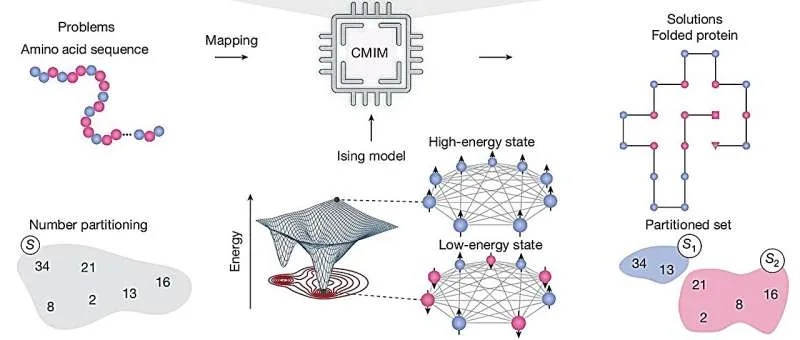
Researchers at Queen’s University in Kingston, Canada, have developed a novel photonic Ising machine designed to address combinatorial optimization problems. This programmable device operates at room temperature and maintains stability over several hours, representing a significant advancement in accessible optimization hardware.
The newly created photonic Ising machine offers a cost-efficient counterpart to existing commercial quantum computers, such as those produced by D-Wave Systems. While both approaches target similar optimization challenges, the Queen’s University apparatus stands out due to its dramatically lower operational and maintenance costs.
D-Wave’s quantum annealers, which rely on superconducting qubits, require complex cooling systems and are associated with high purchase and upkeep expenses. In contrast, the photonic Ising machine leverages light-based components capable of functioning consistently at room temperature, simplifying the technical demands.
This approach potentially broadens the accessibility of quantum-inspired optimization solutions beyond specialized laboratories and enterprises able to afford the premium infrastructure of conventional quantum hardware. By ensuring sustained stability over extended periods, the device supports continuous problem-solving sessions without frequent recalibration or downtime.
The photonic Ising machine employs principles derived from the Ising model, a mathematical framework widely used in physics and computer science to model interactions in spin systems. When adapted into a photonic platform, this model facilitates the representation and resolution of complex optimization problems encountered in various fields, including logistics, cryptography, and machine learning.
Although not a quantum computer in the strictest sense, the device mimics certain quantum-inspired processes, enabling efficient searches through vast solution spaces. Its room-temperature operation and cost advantages suggest it could serve as a practical tool for researchers and industries requiring combinatorial optimization without the overhead associated with traditional quantum machines.
Further details, including specific performance metrics and broader application scopes, have yet to be disclosed. However, this development marks an important step toward more affordable and scalable optimization technologies that blend photonics and quantum-inspired computation.
Queen’s University researchers build a stable, room-temperature photonic Ising machine as an affordable alternative to D-Wave’s quantum computers.