App Store Sees Surge in New Apps Amid Growth of No-Code Platforms in Early 2026
July 21, 2026
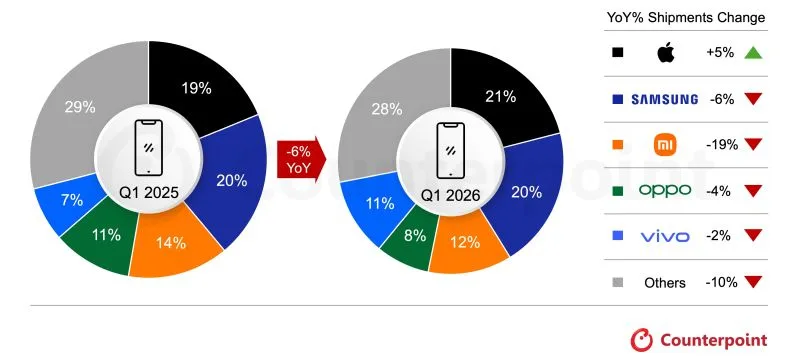
The global smartphone industry is facing a downturn in early 2026, driven by supply constraints and rising memory costs. According to recent research from Counterpoint, shipments of smartphones slipped by 6% in the first quarter compared to the previous year, reflecting the ongoing challenges in production and component availability.
Amid this contraction, Apple has stood out by increasing its iPhone shipments, marking a significant milestone as the company became the leading smartphone supplier for the first quarter. This achievement contrasts sharply with the broader market trend, where many manufacturers struggled with inventory and cost pressures.
Industry analysts attribute Apple’s strong performance to its resilience in navigating supply chain disruptions and its strategic management of scarce memory resources. While many competitors faced difficulties related to memory chip shortages and escalating prices, Apple leveraged its procurement capabilities to sustain and even grow its output.
The overall market decline highlights the sensitivity of the smartphone sector to component supply issues. Memory shortages, in particular, have had a pronounced impact, affecting production timelines and influencing pricing dynamics. As memory prices increase, manufacturers are compelled to adjust their strategies, sometimes scaling back production or delaying launches.
Despite these headwinds, Apple’s ability to expand iPhone shipments suggests a robust demand for its devices and effective supply chain coordination. This capability has enabled the company to grab a leading edge in a faltering market, setting it apart from other players experiencing shipment reductions.
The evolving landscape in the smartphone industry underscores the importance of supply chain agility and component sourcing. As memory availability remains a critical constraint, companies with strong supplier relationships and diversified procurement strategies may continue to outperform.
Looking ahead, the smartphone market is expected to gradually stabilize as supply issues are addressed and price pressures ease. However, the early 2026 data signals a cautious environment where manufacturers must adapt quickly to component market fluctuations to maintain competitiveness.
Despite a 6% drop in global smartphone shipments due to memory shortages and price increases, Apple led the market in Q1 2026.