App Store Sees Surge in New Apps Amid Growth of No-Code Platforms in Early 2026
July 21, 2026
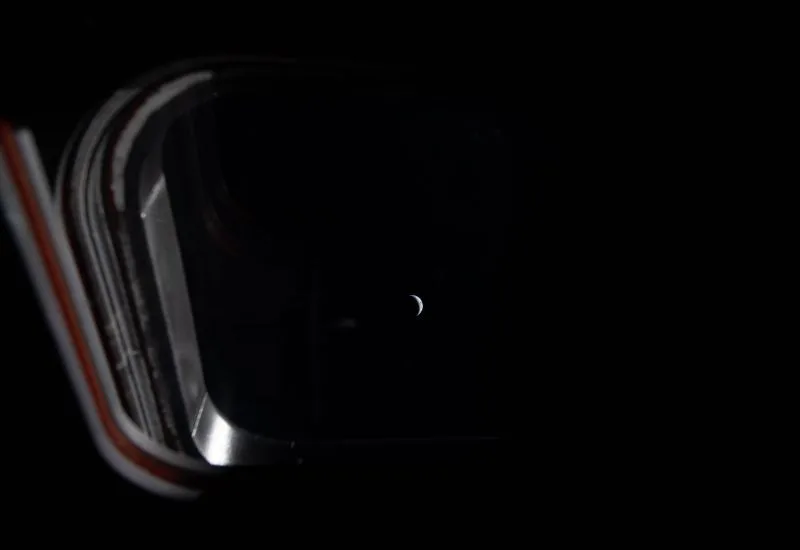
NASA’s Artemis II mission has reached a critical milestone as the Orion spacecraft, carrying four astronauts, entered the Moon’s sphere of gravitational influence. This marks the first time in about 50 years that humans have ventured within this region, where lunar gravity starts to dominate over Earth’s.
On Monday, the Orion spacecraft approached the closest point in its trajectory to the Moon, moving into the domain where the Moon’s gravitational pull has a stronger effect on nearby celestial bodies than Earth’s gravity. This key moment came at 7:41 Moscow time, signaling a new chapter in crewed lunar exploration since the Apollo era.
The mission, Artemis II, aims to carry astronauts around the Moon and return them safely to Earth, setting the stage for future lunar landings and sustained presence in lunar orbit. Entering the lunar gravitational sphere represents a crucial step in navigating the complex space environment between Earth and the Moon, confirming that Orion remains on its planned course.
In lunar gravitational space, the dynamics of the spacecraft’s flight are influenced more by the Moon’s pull, affecting trajectory predictions and navigation controls. Successfully operating in this area is vital for mission success and serves as a demonstrative achievement of NASA’s evolving capabilities in human spaceflight beyond low Earth orbit.
Artemis II follows the unmanned Artemis I mission which tested the Orion spacecraft and Space Launch System (SLS) rocket, validating many systems required for human missions. This step inside the Moon’s gravitational boundary emphasizes the mission progress as the crew moves further away from Earth into deeper space.
The astronauts aboard Orion are expected to complete a lunar flyby before returning, demonstrating both human endurance and technical reliability needed for future lunar surface activities. This mission is a foundational component of NASA’s broader Artemis program, aimed at establishing a sustainable human presence on and around the Moon.
While specific details regarding timing for upcoming maneuvers or mission duration were not highlighted, entering the Moon’s gravitational influence is a clear indicator of the mission’s advancement towards its objectives.
This milestone reaffirms international interest and investment in lunar exploration efforts, heralding a new era of crewed missions operating beyond Earth’s gravitational dominance and pushing the boundaries of human space travel.
Artemis II crew has entered the Moon’s gravitational sphere of influence, marking a key step in NASA’s crewed lunar orbit mission.