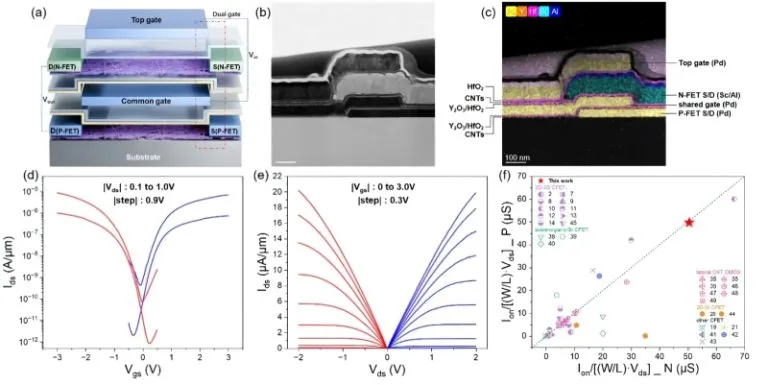
Advancements in CFET Technology Promise Faster, Smaller, and More Reliable Semiconductor Transistors
July 21, 2026
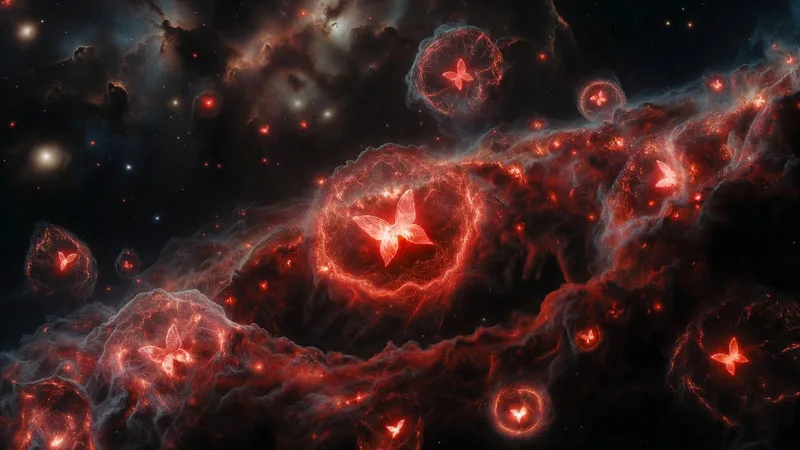
During the first two years of observations by the James Webb Space Telescope, astronomers encountered a puzzling phenomenon: numerous faint, glowing red points scattered throughout the early universe. These objects, informally dubbed “Little Red Dots,” sparked considerable debate and curiosity within the scientific community.
Initially, researchers believed these luminous specks to be supermassive black holes residing at the centers of nascent galaxies. This hypothesis emerged because the red dots appeared extraordinarily bright and compact, a hallmark of active black holes feeding on surrounding material. However, the apparent existence of such massive black holes so soon after the Big Bang contradicted existing astrophysical models, which suggested that black holes of that scale could not have formed or grown rapidly enough during that period.
This discrepancy prompted alternative theories and extensive research to reconcile observations with theoretical frameworks. The mystery centered on not just the rapid growth implied but also inconsistencies with the distribution and characteristics of these red points.
Recent advancements, leveraging comprehensive datasets and refined analytical methods, have provided compelling explanations. Findings indicate that the Little Red Dots are indeed associated with early supermassive black holes, but their formation and growth were influenced by previously underestimated factors in the early cosmic environment.
By accounting for the interplay of gas dynamics, galaxy formation processes, and variations in black hole feeding mechanisms, astronomers now better understand how these gravitational giants could reach substantial sizes more quickly than once thought possible. This enhanced comprehension bridges the gap between observational evidence and theoretical predictions, offering a clearer picture of the universe’s formative stages.
The unraveling of the Little Red Dots’ nature not only resolves a significant astronomical puzzle but also enriches knowledge about galaxy evolution and black hole development shortly after the universe’s inception.
New findings clarify the nature of glowing ‘Little Red Dots’ detected by Webb, challenging previous assumptions about early supermassive black holes.