Advancements in CFET Technology Promise Faster, Smaller, and More Reliable Semiconductor Transistors
July 21, 2026
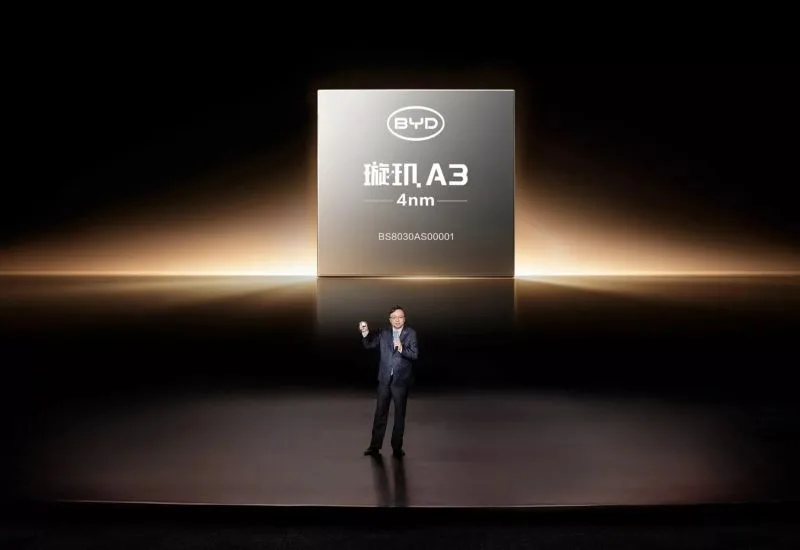
Chinese electric vehicle manufacturer BYD has unveiled a new 4-nanometer chip designed to enhance the performance of its advanced driver-assistance systems. While showcasing this technological development, the company also revealed ambitious plans to refine its autopilot solution, dubbed God’s Eye, with the goal of achieving zero traffic accidents involving its system.
BYD’s leadership emphasized that the ongoing improvements to the God’s Eye autopilot technology are aimed at drastically reducing, if not entirely eliminating, the risk of crashes. This reflects a growing focus within the automotive industry on enhancing safety through improved hardware and software integration in autonomous driving features.
Significantly, BYD has pledged to take financial responsibility for damages incurred in accidents involving its autopilot system. This commitment serves as an assurance to consumers about the reliability of their technology and the company’s confidence in its safety measures. It also signals a shift in how automakers might address liability as autonomous driving capabilities become more widespread.
Details regarding the scope and conditions of BYD’s compensation policy were not disclosed, but the announcement demonstrates a proactive approach to addressing potential challenges linked to self-driving systems. BYD’s announcement follows broader industry trends where manufacturers are investing heavily in AI-enhanced driving capabilities while addressing regulatory and insurance concerns.
The newly developed 4-nanometer chip is expected to provide the computational power necessary to support the complex sensors, data processing, and AI decision-making algorithms critical for safe autopilot functionality. Chip advancements at this scale typically translate to higher efficiency, reduced latency, and improved system responsiveness, all critical factors in autonomous driving applications.
BYD’s God’s Eye system represents the company’s latest effort to secure a leadership position in the competitive autonomous vehicle landscape. By integrating a state-of-the-art chipset and committing to both technological and financial measures to ensure road safety, BYD is positioning itself as a notable player in the evolution of driver-assist and autonomous driving technologies.
The move aligns with BYD’s broader strategy to innovate within the electric vehicle segment by coupling cutting-edge AI capabilities with robust engineering. Although specifics on commercial deployment and adoption timelines remain undisclosed, BYD’s statements underline the company’s vision of a future with safer roads powered by advanced vehicle automation.
Chinese automaker BYD aims for zero accidents with its God’s Eye autopilot system and will cover damages if crashes occur.