Six Unidentified Metallic Spheres Wash Ashore on Australian Beaches Amid Film Production
July 23, 2026
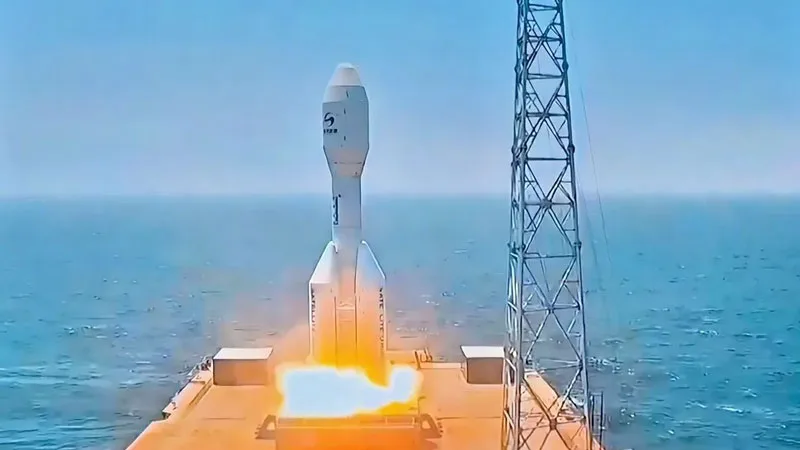
Chinese private aerospace company Orienspace has conducted the third successful launch of its Gravity-1 rocket, recognized as the largest and most powerful solid-fuel launch vehicle globally. The mission marked a significant milestone for China’s private space sector and demonstrated the growing capabilities in solid-propellant space technology.
The launch occurred on July 22, 2026, at 05:54 Moscow time from a repurposed vessel positioned in the East China Sea. Orienspace’s vessel-based launch approach reflects innovative methods in deployment logistics and operational flexibility compared to traditional ground launches.
Gravity-1 carried nine satellites along with an experimental payload, successfully inserting them into their designated orbits. This achievement highlights the vehicle’s capacity for multiple satellite deployment, which is crucial for expanding satellite constellations and supporting diverse space applications.
As a fully solid-fuel rocket, Gravity-1 represents a unique class of launch vehicles. Solid-fuel rockets offer advantages such as simpler design, rapid launch readiness, and increased reliability due to fewer moving parts. Orienspace’s ability to build and operate the largest solid-propellant rocket underscores China’s advancements in this propulsion technology.
The launch adds to Orienspace’s track record of developing competitive launch solutions intended to address the increasing demand for rapid, cost-effective access to space. While detailed specifications and mission parameters have not been publicly disclosed, the successful orbit insertion of multiple payloads confirms the rocket’s operational capability and potential role in future commercial and scientific missions.
Orienspace’s Gravity-1 contributes to the growing ecosystem of private space companies in China, expanding the dynamics of the global space race. The company aims to leverage its launch vehicle technology to serve a variety of clients, including satellite operators and research institutions seeking dependable deployment services.
This accomplishment comes at a time when numerous nations and private enterprises are investing heavily in space infrastructure, satellite constellations, and new propulsion technologies. Gravity-1’s solid-fuel design offers an alternative to liquid-fuel engines, which are generally more complex and time-consuming to prepare before launch.
The continued success of Orienspace and its Gravity-1 launch vehicle signals sustained momentum for China’s private space industry and emphasizes the increasing diversification of launch platforms used worldwide. Further launches are anticipated to explore additional capabilities and possibly scale up payload capacity in the future.
Chinese private firm Orienspace completed the third launch of Gravity-1, the biggest solid-fuel rocket, deploying nine satellites into orbit.