Apple Expands Refurbished Offerings with MacBook Neo Amid Price Increases
June 27, 2026
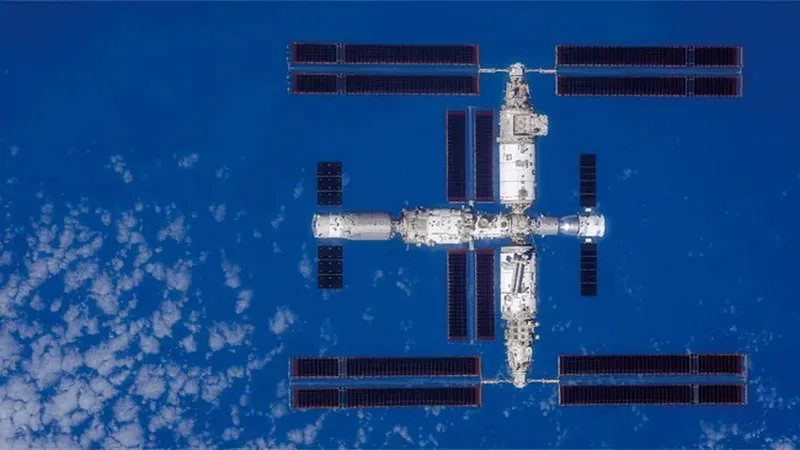
China is preparing to significantly enhance its presence in low Earth orbit by doubling the capacity of its Tiangong space station and launching a new space telescope comparable to the Hubble Space Telescope. These developments signal the country’s ambitions to expand its capabilities in space exploration and scientific observation.
According to statements from the China Aerospace Science and Technology Corporation (CASC), the Tiangong station, which currently consists of three modules, will grow to encompass six modules within the next few years. This expansion will increase the station’s size and functionality, supporting a broader range of scientific experiments, technology demonstrations, and potentially longer crew missions to further advance China’s human spaceflight program.
In addition to broadening its orbital station, China plans to launch a space telescope operating at a level akin to the Hubble Space Telescope. This new space observatory is expected to be positioned in low Earth orbit, enabling it to capture high-resolution images and gather detailed data about the cosmos. The deployment of such an instrument highlights China’s efforts to contribute to space science and astronomical research on a scale comparable to other major spacefaring nations.
The combined efforts of expanding the Tiangong station and launching a sophisticated space telescope demonstrate an integrated approach toward strengthening China’s strategic and scientific interests in space. The enlarged orbital outpost will serve as a platform not only for crewed missions but also as a staging ground for scientific instruments, potentially including telescopes and other observation tools.
China’s advancements come as the international space community observes growing activity and diversification in Earth’s orbital environment. The increased modularity of the Tiangong station will allow for greater versatility in mission planning and operational scope, providing Chinese astronauts and researchers with enhanced facilities for experimentation and maintenance.
While specific details such as timelines, technical specifications, and mission plans have not been fully disclosed, the announcements underscore China’s commitment to expanding its aerospace capabilities over the near term. The integration of state-of-the-art observatory technology aboard a prominent orbital platform reflects a significant step in China’s space exploration strategy.
These initiatives may also foster greater opportunities for international cooperation in space science, potentially inviting partnerships for use of the telescope or joint experiments aboard the Tiangong station. As China continues to develop its space infrastructure, it is expected to become a more influential participant in the global space research and exploration community.
Overall, China’s planned doubling of its Tiangong station and the launch of a Hubble-class telescope mark crucial milestones in its trajectory as a major space power, with impacts on scientific discovery, technology development, and geopolitical stature in space activities.
China will double the size of its Tiangong space station and deploy a Hubble-level space telescope in the coming years, advancing its orbital capabilities.