Advancements in CFET Technology Promise Faster, Smaller, and More Reliable Semiconductor Transistors
July 21, 2026
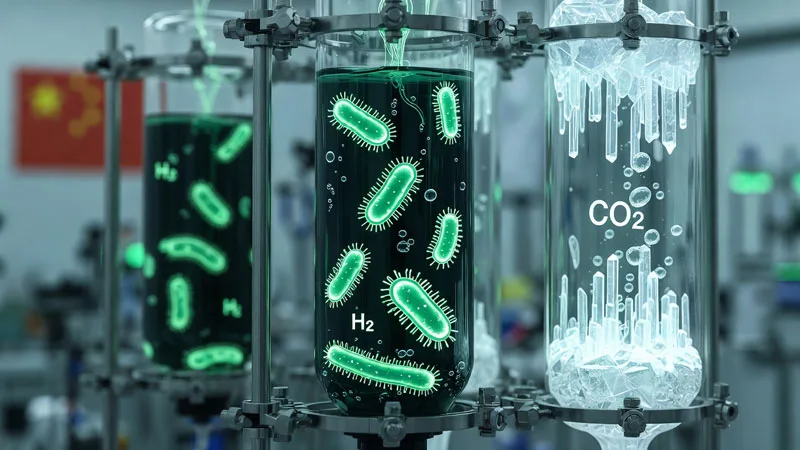
Researchers in China have unveiled an innovative approach to simultaneously produce biohydrogen and capture carbon dioxide using organic waste materials. This dual-function technology harnesses specialized microorganisms in an anaerobic fermentation process, marking a significant advancement in sustainable energy production and environmental management.
The newly developed method leverages the capabilities of certain microbes to process organic waste and wastewater in an oxygen-free environment. During this fermentation, these microorganisms break down the waste, generating biohydrogen — a clean and renewable fuel source — while at the same time absorbing carbon dioxide, a major greenhouse gas contributing to climate change.
This approach addresses two critical global challenges: the demand for eco-friendly energy alternatives and the urgent need to reduce atmospheric CO2 levels. By transforming waste streams into valuable resources, the technology offers a promising avenue to mitigate pollution and support renewable energy goals.
The process utilizes common organic waste materials and sewage, providing an efficient way to manage and repurpose byproducts that would otherwise contribute to environmental harm. The microorganisms’ ability to operate under anaerobic conditions is central to the method’s effectiveness, facilitating the production of biohydrogen without requiring additional energy-intensive inputs.
While details regarding large-scale implementation and commercial availability have yet to be disclosed, this breakthrough signals meaningful progress in integrating waste management with clean energy production. Such biological approaches could complement existing technologies in achieving more sustainable industrial and urban ecosystems.
Further research will be needed to optimize the microbial systems for different types of waste and improve yields, but the foundational concept offers a scalable and environmentally beneficial strategy. If successfully adopted, it could contribute substantially to reducing reliance on fossil fuels and lowering greenhouse gas emissions on a global scale.
This innovation reinforces the growing interest in biohydrogen as a versatile energy carrier, alongside other renewable technologies. China’s development showcases how advanced biotechnology can play a vital role in tackling climate change by turning pollutants into profitable and green energy sources.
A new Chinese breakthrough uses microbial fermentation to generate biohydrogen from waste while simultaneously absorbing CO2, addressing energy and environmental challenges.