HMD Launches Budget-Friendly Touchscreen Phone with AI Features Inspired by Nokia Lumia
July 24, 2026
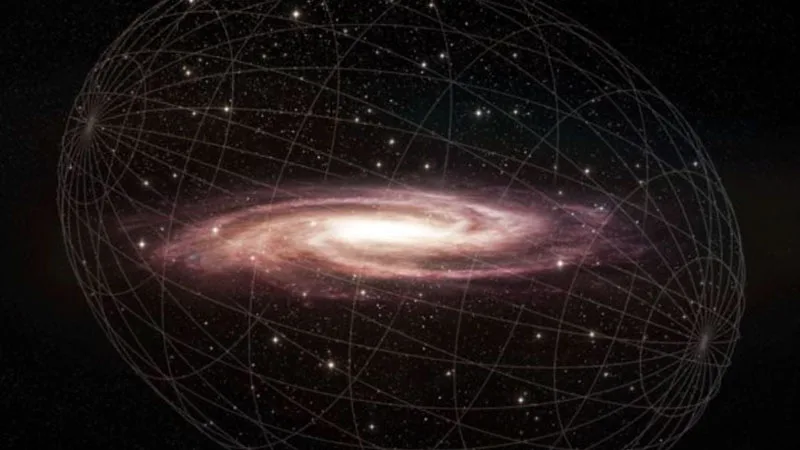
A new study sheds light on the significant cosmic event that reshaped the orientation of the Milky Way galaxy’s disk. According to recent findings, a major encounter between the Milky Way and a massive dwarf galaxy, known as Gaia Sausage, about 10 billion years ago likely caused the galactic disk to tilt by more than 90 degrees from its original plane.
Contrary to the idea of an instantaneous flip, this galactic realignment was a slow process driven by gravitational torque. Over the course of several hundred million years, the interaction exerted enough influence to gradually alter the disk’s orientation. This dynamic event fundamentally changed the structure and appearance of the galaxy, impacting the night sky as seen from Earth.
The collision with Gaia Sausage, a sizable dwarf galaxy that merged with the Milky Way, represents a key episode in our galaxy’s evolution. Such mergers are common in galaxy formation and provide critical insights into how large galaxies grow and change over cosmic timescales. The gravitational forces involved during this prolonged interaction reoriented the galactic disk significantly but did not disrupt the entire Milky Way’s structure.
This realignment influenced the distribution of stars and the overall shape of the Milky Way. The process highlights the complex and dynamic history behind the galaxy’s current configuration. Understanding how these ancient collisions influenced the Milky Way also aids astronomers in modeling galaxy formation and the evolution of stellar populations within the galaxy.
These findings enhance comprehension of the Milky Way’s past and offer explanations for some observed features of the galaxy’s structure. The tilt caused by the encounter means that the plane of the Milky Way’s disk has not always matched its present-day orientation, reshaping the cosmic neighborhood we observe.
Future studies are expected to further explore the nuances of this collision and its effects, as well as similar events in other galaxies. Such research deepens knowledge about the forces that sculpt the universe and the history written in the stars surrounding our solar system.
Scientists reveal that a massive collision with a dwarf galaxy gradually tilted the Milky Way’s disk by more than 90 degrees about 10 billion years ago.