Advancements in CFET Technology Promise Faster, Smaller, and More Reliable Semiconductor Transistors
July 21, 2026
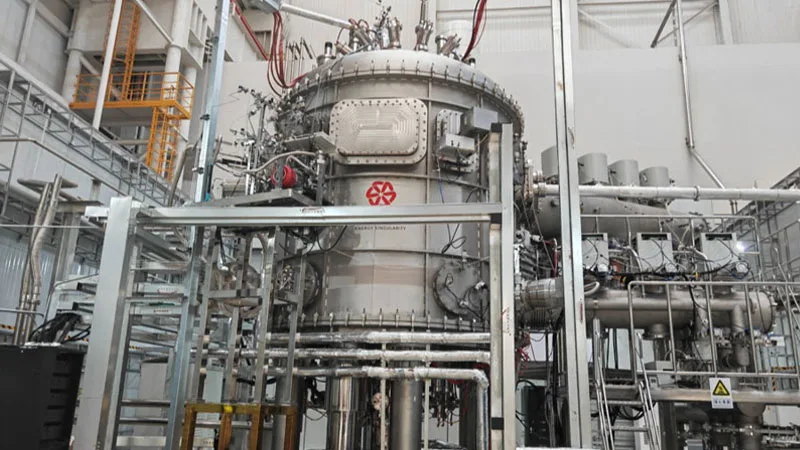
Shanghai-based startup Energy Singularity has announced a significant development in the field of thermonuclear energy. The company’s proprietary tokamak, named HH70, which integrates high-temperature superconductors (HTS), has set a new world record among commercial fusion reactors by sustaining a stable plasma current throughout a continuous cycle lasting 1,337 seconds (over 22 minutes).
The breakthrough achieved by Energy Singularity marks a pivotal point in fusion reactor technology. Tokamaks, which confine plasma using magnetic fields to facilitate nuclear fusion reactions, have long been a focus for clean energy research. Maintaining stable plasma for extended periods is a crucial metric in advancing fusion reactors toward practical energy production.
Energy Singularity’s HH70 design leverages high-temperature superconductors, materials known for conducting electricity with minimal resistance at relatively elevated temperatures compared to traditional superconductors. HTS technology allows for stronger magnetic fields and enhanced efficiency in plasma confinement, contributing to the extended stable operation demonstrated by the HH70 tokamak.
The sustained plasma current duration surpassing 22 minutes represents a notable improvement over previous commercial fusion experiments, which typically have shorter stable operation times. This extended runtime is instrumental in moving fusion reactors closer to delivering continuous and reliable energy output.
The development has attracted attention in the international energy and scientific communities, as fusion energy promises a clean and nearly inexhaustible power source by replicating the processes occurring in the sun. Although major challenges remain in achieving net energy gain and commercial viability, breakthroughs like Energy Singularity’s provide valuable progress indicators.
Further details regarding the reactor’s operational parameters, energy output, and next steps in development have not been disclosed. Nonetheless, the Shanghai company’s achievement underscores the advancing pace of fusion research, especially through innovative applications of superconducting materials.
With growing global interest in sustainable and clean energy technologies, advancements in next-generation fusion reactors such as the HH70 may play a critical role in future energy infrastructures. Continued progress in plasma stability, superconducting magnet technology, and reactor design remain essential to realizing the full potential of fusion energy.
Energy Singularity’s tokamak using high-temperature superconductors maintained plasma for over 22 minutes, setting a new record in commercial fusion reactors.