
Vivo X300 E Launches Soon with Zeiss Optics and Massive 7200mAh Battery
July 20, 2026
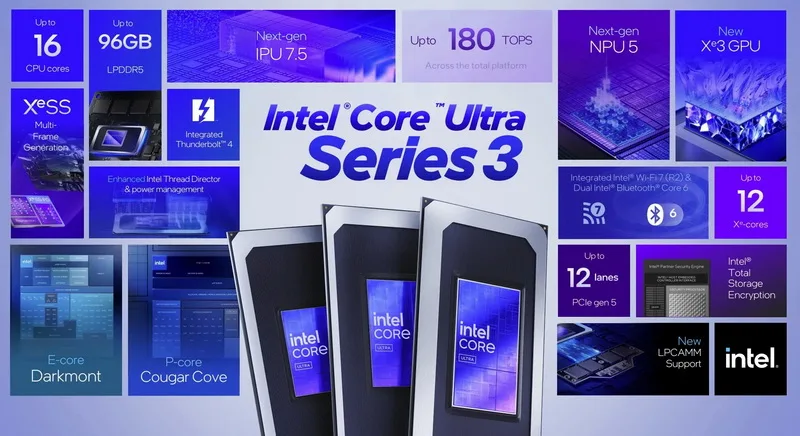
Enthusiasts and technology analysts have recently conducted an in-depth microscopic examination of Intel’s newest Core Ultra Series 3 mobile processors, shedding light on the intricate details of their internal structures. The analysis was carried out by the laboratory Kurnal Insights, providing a rare technical perspective on these recently announced CPUs.
The Core Ultra Series 3, known by Intel’s codename Panther Lake-H, represents the latest iteration in the company’s lineup of high-performance mobile chips. While details about performance and broader specifications have been publicized previously, this microscopic teardown offers a closer look at the physical design and chip layout of these processors.
By dissecting the silicon dies under magnification, Kurnal Insights highlighted various architectural features that distinguish the Core Ultra Series 3 from previous generations. This visual exploration allows a better understanding of elements such as core arrangement, cache configuration, and power distribution components within the chip.
The investigative work conducted by these tech enthusiasts underscores the evolving complexity of semiconductor manufacturing, especially as mobile processors strive to balance power efficiency with raw computational capability. Observing the inner workings below the chip’s surface helps industry watchers and hardware designers gauge advancements in integration density and thermal management.
Although Intel has shared its roadmap and some technical specifications for Panther Lake-H processors, the microscopic study sheds additional light on the craftsmanship embedded within these units. Such analyses play a crucial role in revealing how Intel continues to adapt its processor designs to meet the growing demands of modern laptops and portable computing devices.
This level of device scrutiny is a testament to the vibrant community of independent experts and enthusiasts who contribute valuable insights through reverse engineering and hardware exploration. Their work complements official disclosures and enriches public knowledge regarding the technologies driving the next generation of computing performance.
As Intel prepares for broader deployment and adoption of the Core Ultra Series 3 processor family, ongoing examination and discussion around their architecture will likely continue. These insights not only inform consumers and professionals but also assist the industry in tracking trends and innovations within the competitive semiconductor landscape.
Kurnal Insights reveals unique structural details of Intel’s Core Ultra Series 3 mobile CPUs through microscopic analysis.