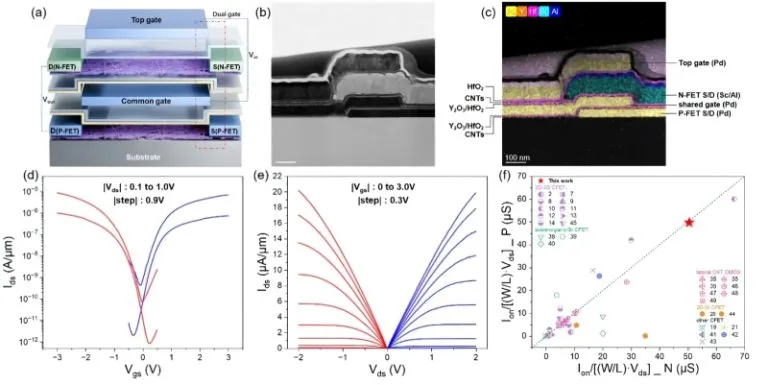
Advancements in CFET Technology Promise Faster, Smaller, and More Reliable Semiconductor Transistors
July 21, 2026
Astronomers have uncovered 87 previously undetected stellar streams in the outer regions of the Milky Way, utilizing data collected by the European Space Agency’s Gaia space telescope. This discovery more than quadruples the number of known stellar streams, offering fresh insights into the structure and evolution of our galaxy.
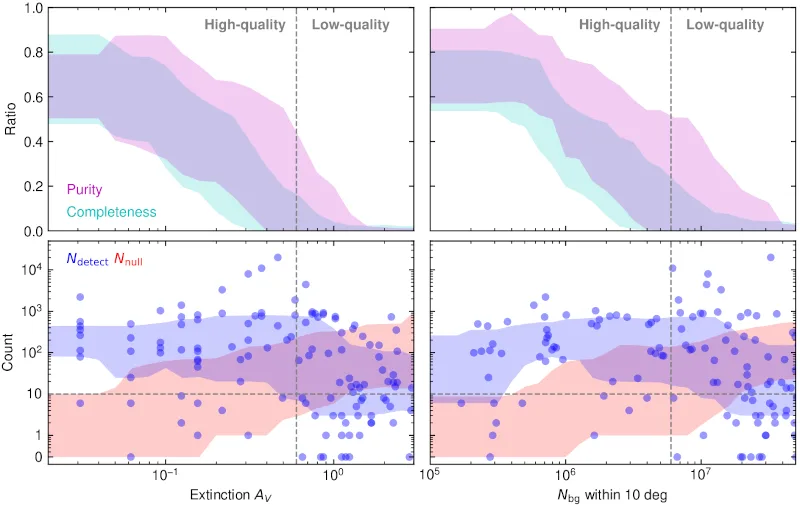
The team applied an advanced analytical tool known as the StarStream algorithm to the extensive dataset provided by Gaia. This approach enabled them to identify subtle patterns and groupings of stars moving coherently through space, which had eluded detection in earlier surveys.
Stellar streams consist of stars that were once part of smaller star clusters or dwarf galaxies but are now stretched out along elongated paths due to gravitational interactions with the Milky Way. Mapping these streams is crucial for understanding how the galaxy has grown and evolved over billions of years through mergers and accretion events.
Moreover, studying the distribution and paths of these streams yields valuable clues about the underlying gravitational forces at play, including the elusive dark matter that makes up a significant portion of the galaxy’s mass but cannot be observed directly. The new findings thus provide an expanded dataset for probing the Milky Way’s dark matter halo.
The Gaia mission, launched to create a precise three-dimensional map of over a billion stars, has revolutionized stellar cartography with its accurate positional and motion data. The identification of so many new stellar streams highlights the mission’s ongoing impact on galactic astronomy.
As astrophysicists continue analyzing the rich Gaia dataset in combination with innovative computational methods, the understanding of the Milky Way’s structure and the distribution of its unseen components will become increasingly refined, shaping future research in the field.
Using ESA’s Gaia telescope data, astronomers have identified 87 new stellar streams in the Milky Way, significantly expanding knowledge of the galaxy’s structure.