Advancements in CFET Technology Promise Faster, Smaller, and More Reliable Semiconductor Transistors
July 21, 2026
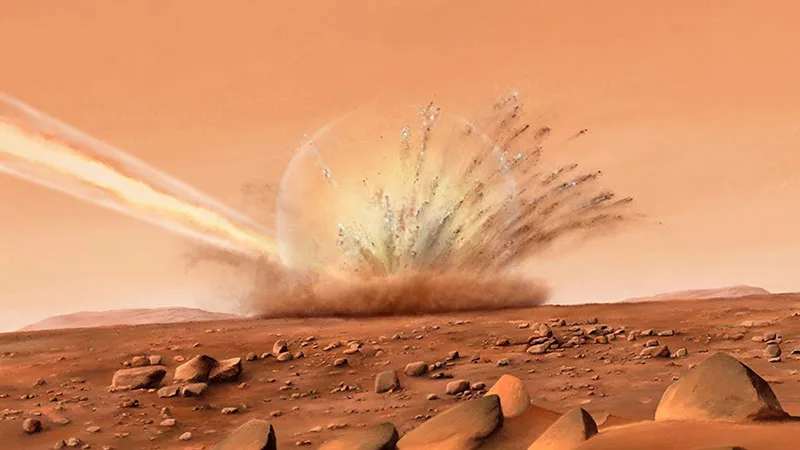
A recent scientific experiment has revealed that bacteria can survive the extreme conditions associated with asteroid impacts and the subsequent travel through space between planets. This discovery offers fresh insights into the potential for microbial life to endure harsh cosmic events and raises intriguing questions about the origins of life on Earth.
Researchers conducted a pioneering study where bacterial samples were exposed to a sequence of intense shock events that simulated the effects of an asteroid striking a planetary surface. The impact conditions sought to replicate the forces that could eject rock fragments containing microbes into space.
Following this simulated asteroid impact, the bacteria were subjected to conditions analogous to interplanetary travel, enduring the challenges associated with transit through space. After this journey, the samples were then exposed to a second impact scenario, modeling the landing on a different planet’s surface.
The results demonstrated that a significant portion of the bacteria remained viable through each phase of the experiment—surviving both the initial ejection into space and the subsequent planetary collision. This finding stands as the first experimental evidence that microorganisms can withstand such extreme sequences of events without losing their viability.
Such resilience suggests that microbial life could potentially be transferred between planets via natural space processes such as asteroid impacts. This possibility aligns with the theory of panspermia, which proposes that life may spread throughout the cosmos, hitching rides on celestial bodies.
The implications of these findings are profound, as they breathe new life into hypotheses that Earth’s bacterial life might share origins with extraterrestrial sources. Some scientists have speculated, perhaps half-jokingly, that terrestrial bacteria could have originated from Mars, having been transported here across the solar system through ancient asteroid collisions.
Beyond the theoretical, this study enhances understanding of microbial endurance in space environments, which could inform the search for life on other planets and guide protocols for contamination prevention during future space missions.
While the experiment’s details on the bacterial strains tested, exact impact forces, or duration of space exposure were not disclosed, the groundbreaking demonstration of microbial survival under such conditions marks a significant advance in astrobiology.
As research progresses, these insights into bacterial durability across cosmic phenomena continue to reshape perspectives on life’s distribution in the universe and the interconnectedness of planetary ecosystems.
Scientists demonstrate bacteria can endure extreme asteroid impacts and space travel, suggesting possible Mars origins for Earth microbes.