Advancements in CFET Technology Promise Faster, Smaller, and More Reliable Semiconductor Transistors
July 21, 2026
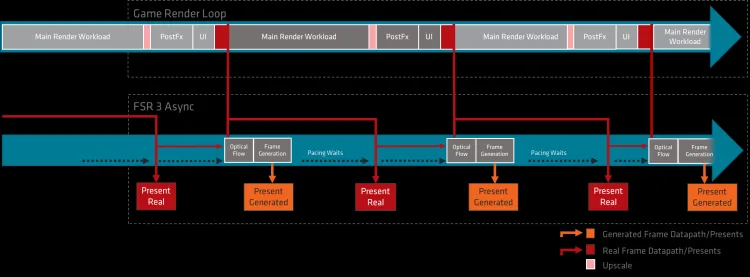
Recent tests examining the impact of frame generation technologies on gaming latency reveal that higher frame rates, boosted by tools like DLSS and FSR, do not always translate into more responsive gameplay. While these techniques have gained popularity for their ability to significantly increase frames per second (FPS), the latency introduced by generating frames artificially might be more detrimental than many players anticipate.
Frame generation technologies work by synthesizing additional images between real rendered frames to deliver a smoother visual experience. This can create impressive FPS numbers on performance charts, giving the impression of a notable boost in graphical fluidity. However, the underlying trade-off is that generating extra frames inherently adds processing time, which impacts the responsiveness of the game to player inputs.
For many gamers, FPS has long been a key metric for determining the quality and smoothness of gameplay, often overshadowing concerns about latency. The tests assessed how much delay the frame generation process introduces relative to traditional rendering methods. The findings show that while FPS values soar, the input lag rises as well — sometimes enough to affect gameplay performance noticeably.
Players relying on quick reflexes, especially in competitive or fast-paced games, may find the additional latency from frame generation frustrating. The delay between controller input and on-screen action can feel sluggish, offsetting some of the advantages brought by higher frame rates. This phenomenon clarifies why extraordinarily high FPS numbers displayed in benchmarks may not fully convey real-world responsiveness.
Game developers and hardware manufacturers have been promoting DLSS (Deep Learning Super Sampling) and FSR (FidelityFX Super Resolution) as solutions to optimize performance by leveraging AI-driven frame interpolation. While the approach effectively reduces the graphical workload on GPUs and allows older or mid-range hardware to achieve higher apparent frame rates, these tests underscore the importance of evaluating latency alongside FPS.
Ultimately, gamers should consider frame generation as a double-edged sword: it enhances visual smoothness and frame rate counts but can introduce frame input lag that impacts the immediacy of controls. These results suggest that gamers prioritizing responsiveness might choose settings that favor traditional rendering techniques over synthetic frame insertion, balancing visuals with real-time control fidelity.
The industry conversation around frame generation must increasingly address latency implications, as expectations evolve for both visually stunning and highly responsive gaming experiences. Understanding the real cost of FPS gains through frame generation is crucial for users aiming to optimize their hardware and settings for their preferred style of play.
Frame generation technologies like DLSS and FSR increase FPS but can introduce noticeable input lag during gameplay.