App Store Sees Surge in New Apps Amid Growth of No-Code Platforms in Early 2026
July 21, 2026
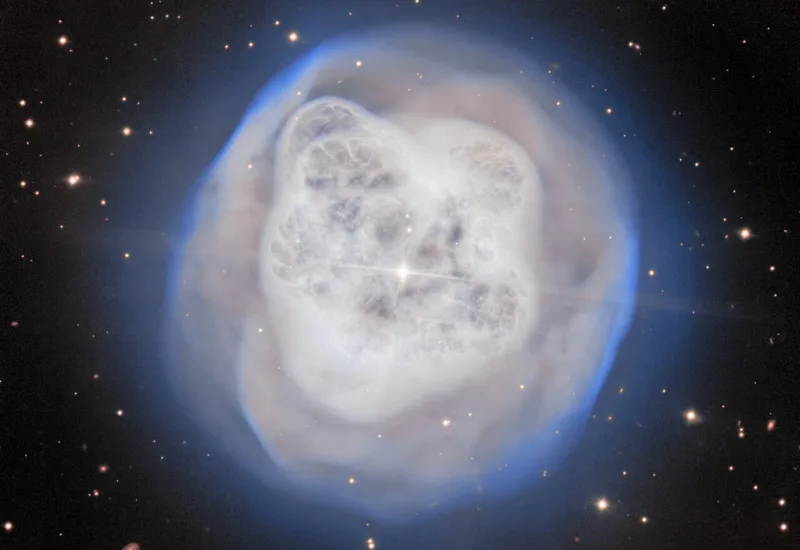
The Gemini North telescope located in Hawaii has recently captured detailed images of the Crystal Ball Nebula, also known as NGC 1514, showcasing the dramatic final stages of a star’s life cycle. This planetary nebula resides in the constellation Taurus and is approximately 1,500 light-years from Earth.
The Crystal Ball Nebula represents a dying binary star system, where one of the stars is shedding its outer gaseous layers as it approaches the end of its lifecycle. The images from Gemini North provide astronomers with a clearer view of the intricate structures formed by the ejected gas surrounding the central stars.
Planetary nebulae like NGC 1514 are crucial to understanding the lifecycle of medium-sized stars. They occur when a star exhausts the fuel needed for nuclear fusion and begins to cast off its outer envelopes. This process enriches the surrounding interstellar medium with heavier elements, playing a significant role in cosmic chemical evolution.
The binary nature of the central star system in the Crystal Ball Nebula adds complexity to the gas patterns observed. Interactions between the two stars influence the shape and density of the outflowing material. Gemini North’s high-resolution imagery allows researchers to study these phenomena in greater detail, contributing valuable data to the field of stellar astrophysics.
Located atop Maunakea in Hawaii, the Gemini North telescope is well-positioned to observe such celestial objects with minimal atmospheric interference. Its advanced optical systems provide exceptionally sharp images, aiding astronomers in examining structures thousands of light-years away.
The visualization of NGC 1514 illuminates the ongoing processes that govern how stars evolve and ultimately disperse their matter back into space. Such observations help refine models predicting stellar behavior and the future development of similar systems within our galaxy.
While details regarding further studies or follow-up observations were not disclosed, imagery like this continues to deepen scientific knowledge about the universe and the dynamic events occurring in dying star systems.
Gemini North telescope images the Crystal Ball Nebula, revealing gas layers shed by a dying binary star system 1,500 light-years away.