
Microsoft Unveils AI Model to Automate Software Vulnerability Detection and Remediation
July 28, 2026
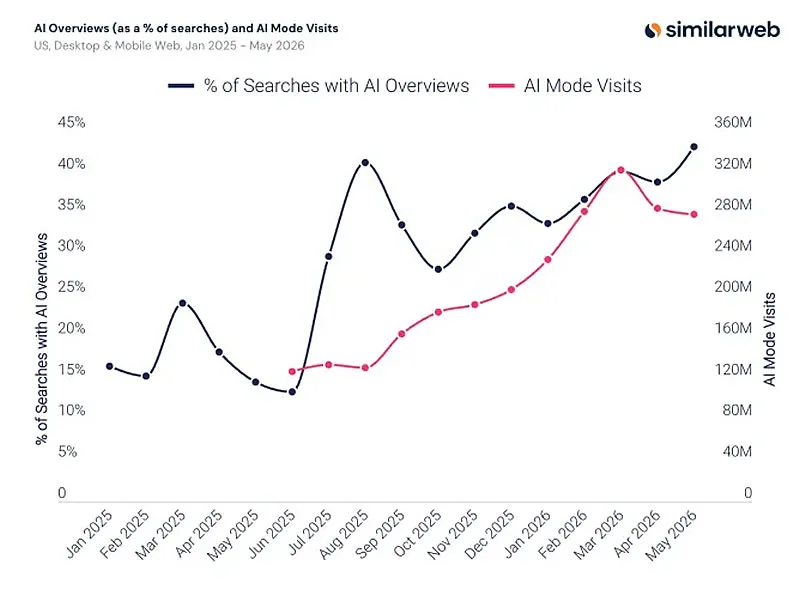
Google’s integration of artificial intelligence (AI) into its search results has advanced significantly, with AI-powered answers now present in nearly half of all searches conducted on the platform. This shift reflects a substantial change in how users engage with online information, as many increasingly consume content directly within the search interface instead of visiting third-party websites.
According to data analyzed by Similarweb, the prevalence of AI-generated responses in Google search results has surged over the past year, rising from about 15% to 43% of all queries. This marks a transformative development in digital information consumption, with almost half of all search queries yielding AI-powered answers that users can view instantly without additional clicks.
This change suggests that Google’s strategy of embedding AI-generated content within search results is substantially altering user behavior. Instead of following traditional search patterns where users click through to websites hosting the desired content, many now find the needed information presented immediately on the results page. This integration of AI attempts to streamline the information retrieval process by offering concise, synthesized answers generated by advanced machine learning models.
While this evolution benefits users seeking quick responses, it presents challenges for content publishers, journalists, and website owners who have traditionally relied on organic search traffic to reach audiences. With fewer users moving beyond Google’s platform, many publishers are experiencing declines in site visits, which can impact advertising revenue and overall digital visibility.
Industry experts note that this trend underscores a broader shift in the digital economy, where platforms curating AI-driven answers increasingly mediate how information is accessed. The direct consumption of knowledge within search engines raises new questions about content attribution, monetization, and the sustainability of independent publishing in the internet ecosystem.
Google has not publicly disclosed specific details regarding the algorithms or the exact nature of the AI systems powering these responses. However, the rapid adoption of AI content delivery aligns with a larger industry movement toward integrating large language models and other AI technologies into everyday digital tools.
Moving forward, the balance between providing users with immediate answers and maintaining a healthy online publishing environment remains a crucial issue. Publishers and digital strategists may need to innovate new approaches to engage audiences beyond initial search results and adapt to the evolving landscape shaped by AI-enhanced search experiences.
AI-generated answers on Google now feature in 43% of searches, shifting user behavior away from clicking through to external sites.