App Store Sees Surge in New Apps Amid Growth of No-Code Platforms in Early 2026
July 21, 2026
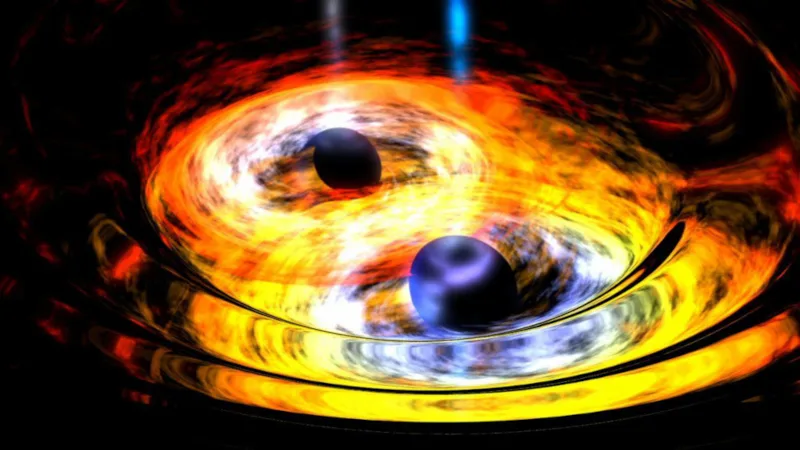
Recent analysis conducted by astrophysicists offers fresh insights into the formation processes of the universe’s most massive black holes. A comprehensive study examining dozens of black hole mergers detected via gravitational wave observatories indicates that the largest black holes, especially those exceeding approximately 45 times the mass of the Sun, do not originate directly from the collapse of individual stars.
The research team analyzed 153 black hole coalescence events cataloged in the latest gravitational wave data compilation known as GWTC-4. Their findings provide compelling evidence that the heaviest black holes are assembled through a hierarchical merging process. This process predominantly takes place within tightly packed groups of ancient stars called globular clusters.
Globular clusters are dense stellar environments where numerous black holes can reside in close proximity. Over time, dynamical interactions within these clusters increase the likelihood of smaller black holes pairing up and merging. These repeated mergers gradually build up black hole masses beyond what is expected from the remnants of typical stellar deaths.
Traditional models previously assumed that black holes heavier than about 45 solar masses rarely form directly from the collapse of single massive stars due to the physics of stellar evolution and supernova explosions. The new findings align with this view but strengthen the hypothesis that subsequent mergers are responsible for creating the most massive black holes observed through gravitational wave signals.
This hierarchical growth mechanism has important implications for understanding both the demographics and distribution of black holes in the universe. Since globular clusters harbor numerous stars aged billions of years, they serve as natural laboratories where multiple generations of black holes interact dynamically, driving the formation of especially heavy remnants over cosmic timescales.
By linking gravitational wave observations to dense stellar environments, the study provides a clearer picture of black hole assembly scenarios. It also sheds light on the astrophysical processes governing the evolution of compact objects in high-density regions, which have been challenging to observe through electromagnetic signals alone.
Future gravitational wave detections and more detailed observations of star clusters may help refine models of black hole formation and merger rates. Such advances could enhance understanding of the mass spectrum of black holes and their role in shaping the evolution of galaxies and large-scale cosmic structures.
New research suggests the most massive black holes arise from multiple mergers in dense star clusters rather than directly from star deaths.