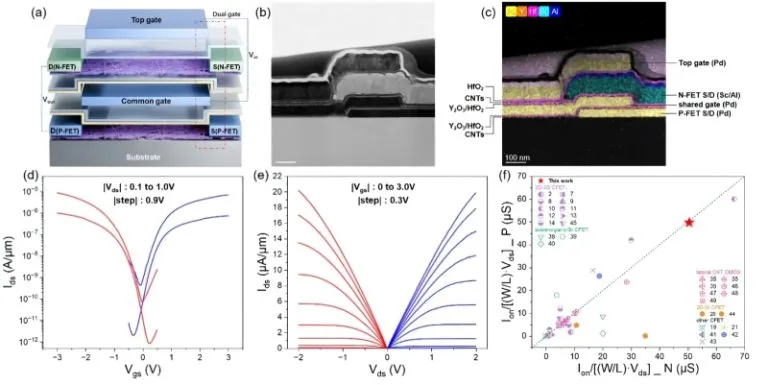
Advancements in CFET Technology Promise Faster, Smaller, and More Reliable Semiconductor Transistors
July 21, 2026
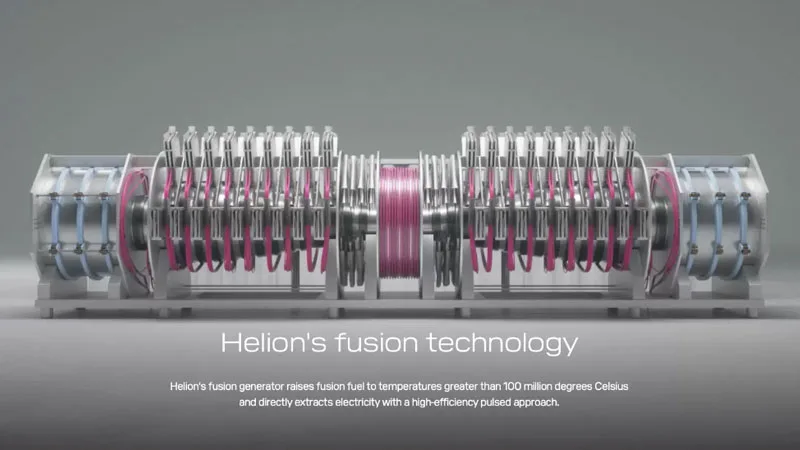
Helion Energy has marked a significant breakthrough in fusion energy technology by becoming the first private company to demonstrate measurable deuterium-tritium (D-T) nuclear fusion. This achievement, facilitated by its seventh-generation reactor prototype named Polaris, represents an important step toward controlled and practical thermonuclear fusion energy.
The demonstration occurred in early 2026 following regulatory approval to operate with tritium, a radioactive isotope of hydrogen essential for high-yield fusion reactions. During testing, Polaris attained plasma temperatures reaching 150 million degrees Celsius, equivalent to approximately 13 kiloelectronvolts (keV), temperatures necessary to initiate and sustain fusion.
The ability to carry out D-T fusion reactions is regarded as a crucial milestone because this fuel mixture produces the highest energy output among fusion fuels and is the focus of much international fusion research. Helion Energy’s success in this domain highlights the growing impact of private sector efforts in a field historically dominated by government-funded programs.
Building on this progress, Helion Energy is now developing a fusion power plant project specifically designed to supply electricity to Microsoft. This collaboration indicates an increasing interest and investment in fusion technology from major corporations looking to diversify energy portfolios with low-carbon, sustainable sources.
The Polaris reactor’s achievement demonstrates the potential for scalable fusion devices that could one day deliver continuous, clean power to the grid. Fusion energy is often hailed for its promise of abundant fuel supply, minimal radioactive waste, and safety advantages over traditional nuclear fission plants.
Despite these promising advancements, commercial fusion energy remains in development, with numerous technical challenges still to overcome such as fuel handling, plasma confinement, and energy capture efficiency. Helion Energy’s progress represents an encouraging sign that emerging companies are steadily advancing toward viable fusion solutions.
Details regarding the timeline, scale, and cost of Helion Energy’s forthcoming power plant for Microsoft have not been disclosed. However, this partnership underscores the role of innovative public-private collaborations in accelerating the path toward commercially viable fusion energy.
Overall, Helion Energy’s milestone in achieving measurable D-T fusion with their Polaris reactor prototype is a pivotal development in the quest for clean, sustainable nuclear fusion power.
Helion Energy becomes the first private company to achieve measurable D-T fusion, hitting 150 million °C plasma temperature and advancing fusion power development.