
Vivo X300 E Launches Soon with Zeiss Optics and Massive 7200mAh Battery
July 20, 2026
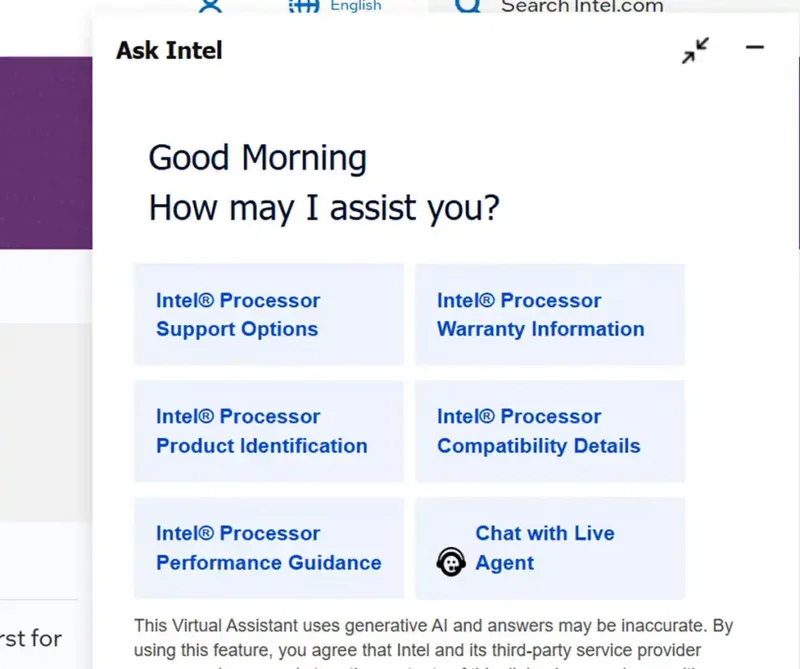
Intel recently launched a new AI-driven digital assistant on its official technical support website, aiming to streamline customer service interactions by offering instant responses without the need for human operators. This initiative is part of a broader trend to integrate artificial intelligence into customer support functions, promising faster problem-solving capabilities for users seeking technical assistance.
While the concept of employing AI to troubleshoot common technical issues is appealing, initial feedback reveals significant shortcomings. Numerous users have reported that the AI assistant frequently delivers responses that are either incorrect or overly simplistic, failing to adequately address the complexity of certain problems. More alarmingly, in some cases, the AI’s suggestions were identified as potentially hazardous, raising concerns about user safety and the reliability of automated advice.
The new Ask Intel feature allows customers to pose technical queries directly to the AI, bypassing traditional live support channels. This approach was intended to reduce wait times, increase accessibility, and improve the overall efficiency of the support process. However, the prevalence of inaccurate or dangerous recommendations undermines these goals, leading to frustration and diminished trust among users relying on this tool.
Intel has not released detailed information regarding the underlying AI technology or the scope of its training data, leaving questions about the system’s robustness and constraints. Experts familiar with AI implementation in customer service emphasize the importance of rigorous testing and continuous updates to ensure that automated solutions maintain high standards of accuracy and safety.
Tech industry observers note that while AI has tremendous potential to transform support operations, its deployment must be accompanied by clear disclaimers and fallback options to human agents when the technology fails to provide reliable assistance. In the absence of such safeguards, users may be exposed to advice that could lead to hardware damage, data loss, or other unintended consequences.
As AI-based customer support tools grow in prevalence, the Intel case serves as a reminder that technological innovation in this area requires balanced consideration of user experience and risk management. Companies adopting similar systems face the challenge of continuously refining their algorithms to prevent misleading guidance and ensure safe, useful interactions.
Intel’s experiment with AI-powered technical support highlights the promise and pitfalls of automating complex customer service functions. While the initiative aims to enhance convenience and responsiveness, current performance issues demonstrate the need for ongoing improvements before such tools can fully replace human expertise in sensitive technical contexts.
Intel introduces AI assistant for tech support, but users report it frequently provides misleading and potentially dangerous solutions.