Advancements in CFET Technology Promise Faster, Smaller, and More Reliable Semiconductor Transistors
July 21, 2026
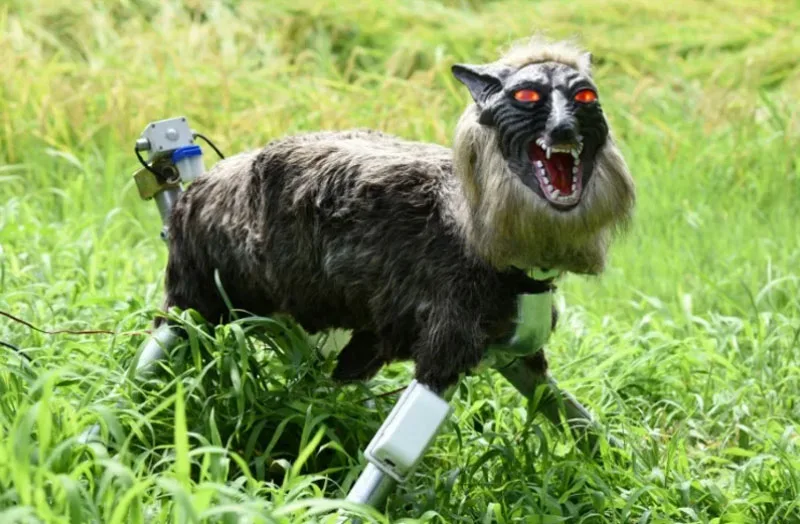
In response to an increase in wild animal encounters and damage to farmland, Japan has turned to an innovative robotic solution to address the growing challenge posed by bears and other wildlife. The rise in incidents over the past year involving wild animals attacking humans and destroying crops has pushed authorities and technology firms to explore advanced deterrent methods.
The project, spearheaded by the Japanese company Ohta Seiki, has resulted in the development of the “Monster Wolf,” a quadruped robotic system designed to scare off bears and other potentially dangerous wildlife. Unlike typical mechanical deterrents, these robotic wolves not only mimic the appearance of a natural predator but also function in a practical capacity to safeguard residents and agricultural areas.
Quadruped robots have become increasingly common in various applications, facilitating the creation of realistic and mobile systems capable of adapting to complex environments. The Monster Wolf utilizes this advanced mobility to patrol vulnerable zones where human-animal conflicts have surged, providing a non-lethal means to reduce encounters.
Since its release, the Monster Wolf has gained rapid attention and demand, positioning it as something of a scarce commodity. The effectiveness of such robotic deterrents could inspire similar approaches in other regions affected by wildlife-related issues, particularly where the balance between human activity and natural habitats is delicate.
While specific technical specifications or pricing details have not been publicly disclosed, the concept marks a notable development in the intersection of robotics and wildlife management. As the frequency and severity of animal interactions increase, technology-driven solutions like the Monster Wolf offer promising avenues for enhancing safety and protecting agricultural productivity without harming the animals involved.
The deployment of robowolves in Japan exemplifies how emerging technologies are being leveraged to coexist sustainably with wildlife. Continued observation will determine how widely such robotic intervention models are adopted in other countries facing similar environmental and safety challenges.
Japan introduces robotic wolves to counter rising wild animal attacks and agricultural damage caused by bears and other wildlife.