Logitech Unveils G316 X 98 Wired Gaming Keyboard with Hot-Swappable Keys and 8kHz Polling Rate
June 16, 2026
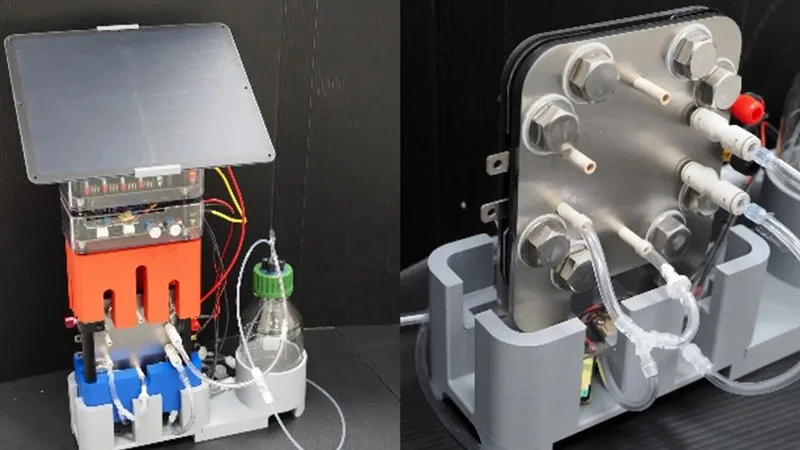
Researchers at Osaka Metropolitan University have unveiled a new artificial photosynthesis system capable of converting sunlight, water, and carbon dioxide into chemical fuel. Unlike traditional setups, this innovative electrolysis system operates without the need for a battery control unit, marking a significant advancement in sustainable fuel synthesis technology.
Conventional artificial photosynthesis devices typically require a battery unit to continuously adjust the electrolyzer’s performance in response to fluctuating sunlight intensity and environmental variations. This necessity introduces complexity and potential inefficiency into the system.
The team at Osaka Metropolitan University addressed this challenge by designing an electrolyzer that self-regulates through natural heating processes during operation. This intrinsic temperature-responsive mechanism enables the device to maintain stable electrolysis conditions without relying on an external battery for control, streamlining the system architecture.
The new battery-free electrolyzer harnesses solar energy to drive the chemical reactions that split water molecules while capturing carbon dioxide, converting these inputs directly into usable fuel compounds. This approach mirrors natural photosynthesis but aims to enhance efficiency and scalability for sustainable energy applications.
The absence of a battery control unit not only simplifies the overall design but potentially reduces costs and improves the system’s durability, making it a promising step forward in artificial photosynthesis research and renewable fuel production.
While specific performance metrics, cost details, and commercialization timelines have not been disclosed, the breakthrough highlights a noteworthy direction for clean energy technologies that leverage abundant resources such as sunlight, water, and atmospheric CO2.
The development aligns with broader global efforts to create carbon-neutral energy solutions by mimicking and surpassing natural processes to generate clean fuels, which could one day help reduce reliance on fossil fuels and mitigate climate change impacts.
Osaka Metropolitan University scientists create an artificial photosynthesis system producing fuel from sunlight, water, and CO2 without a battery control unit.