Advancements in CFET Technology Promise Faster, Smaller, and More Reliable Semiconductor Transistors
July 21, 2026
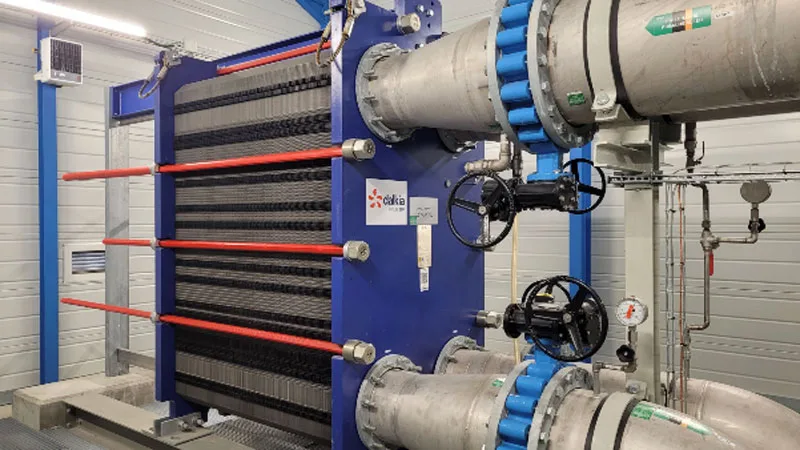
The European Organization for Nuclear Research (CERN) has found an innovative use for the thermal energy generated by the Large Hadron Collider (LHC). Starting from mid-January 2026, heat captured from the collider is being supplied to the central heating network of Ferney-Voltaire, a small town in France.
The system, which began operating in December 2025, channels excess heat produced by the LHC into a district heating grid that serves both residential and commercial buildings in the area. This marks one of the first instances where the byproduct heat from a high-energy physics accelerator is put to practical use outside the laboratory.
By converting the previously wasted thermal output of the LHC into usable heat for the community, CERN is contributing to local energy efficiency and sustainability initiatives. The project not only reduces dependence on conventional heating fuels but also demonstrates how advanced research facilities can integrate into broader environmental and energy frameworks.
Ferney-Voltaire, located near CERN’s main site, benefits directly from this effort by receiving a new, reliable source of warmth during colder months. Although detailed data on the scale of heat supply and cost implications have not been disclosed, this initiative exemplifies a growing trend of leveraging scientific infrastructure to support green energy goals.
CERN has traditionally focused on particle physics, but this pilot project highlights an expanded role in environmental responsibility. Capturing and redirecting heat from such large-scale scientific equipment helps mitigate energy waste, aligning with EU sustainability targets and global efforts to lower carbon emissions.
As clean energy solutions continue to evolve, the approach pioneered in Ferney-Voltaire could inspire similar programs at other large research facilities worldwide. Using the heat generated by scientific experiments as a resource rather than waste could pave the way for more efficient energy ecosystems connected to technology hubs.
Heat captured from CERN’s Large Hadron Collider is now used to warm residential and commercial buildings in Ferney-Voltaire, France.