Advancements in CFET Technology Promise Faster, Smaller, and More Reliable Semiconductor Transistors
July 21, 2026
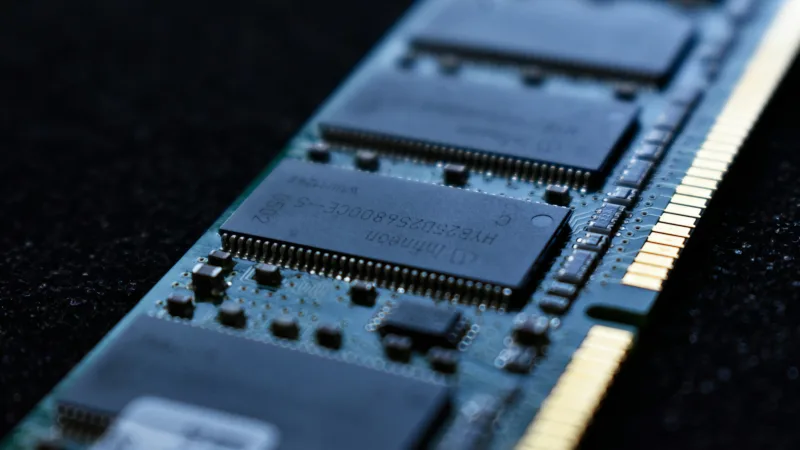
Recent developments in the global memory market have revealed a period of price stabilization across key regions including Europe, China, and the United States. Although certain memory products have experienced downward price adjustments, industry experts caution that these movements do not indicate an end to the broader supply challenges faced by the sector.
Insights gathered from industry analysts suggest that the observed price plateau and selective declines are primarily due to localized factors such as inventory buildup and buyer hesitancy. The increased stock levels have temporarily alleviated upward pricing pressure, while cautious purchasing behavior has further contributed to this trend.
Despite these factors, the overarching influence of sustained demand from artificial intelligence (AI) data centers continues to shape the memory market’s trajectory. This persistent appetite for high-performance memory resources has prevented a comprehensive normalization of prices, as supply remains constrained to meet rapid expansion in AI infrastructure.
Market observers note that the current pricing environment is not a signal that shortages are resolving; instead, it reflects a brief easing driven by unsettled buying patterns and strategic inventory management among suppliers.
Looking ahead, analysts foresee the first significant softening in memory prices emerging only in the fourth quarter of 2027. This projection underscores the long-term impact that AI-driven demand is having on memory production and distribution.
Full normalization of the memory market—defined by stable supply-demand balance and price adjustments returning to pre-AI growth era levels—is anticipated no sooner than 2030. This timeline highlights the sustained pressure AI data centers exert on memory resources and the extensive period required for the industry to scale capacity accordingly.
In summary, while select segments of the memory market may experience short-term price reductions, the broader ecosystem faces ongoing challenges. The combination of AI workload proliferation and cautious market dynamics will likely keep memory prices elevated for several more years before achieving stabilization.
Memory prices have plateaued with some declines, but full market stabilization from AI-driven demand is expected only by 2030.