App Store Sees Surge in New Apps Amid Growth of No-Code Platforms in Early 2026
July 21, 2026
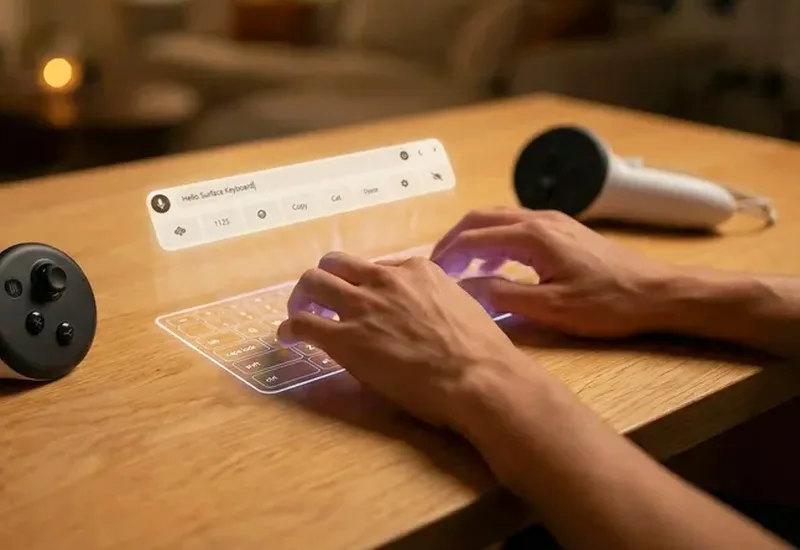
Meta has launched a new feature for its Quest 3 virtual reality headset, introducing virtual keyboard and touchpad capabilities aimed at transforming user interaction within VR environments. This innovation allows any flat surface to be converted into a functioning virtual input device, offering a new approach to typing and navigation in virtual reality.
The new virtual keyboard and touchpad functionalities were announced by Meta as part of their ongoing efforts to enhance productivity tools available in virtual reality. Users can now project these virtual interfaces onto physical surfaces, eliminating the need for dedicated hardware peripherals or complex controller inputs when working or communicating within VR applications.
While the names “Surface Keyboard” and “Surface Touchpad” may recall Microsoft’s well-known Surface product line, this Meta offering is an independent technology with no association to Microsoft. Instead, it represents Meta’s vision to integrate more natural and seamless input methods into the VR ecosystem, leveraging existing surfaces in users’ environments for practical and ergonomic input.
The feature has been incorporated into the Quest 3 headset, Meta’s latest standalone virtual reality device. By using the headset’s sensors and cameras, the system detects flat surfaces around the user and projects the virtual keyboard and touchpad onto them. This approach aims to reduce friction during extensive typing or detailed navigation sessions, which can be cumbersome using standard VR controllers.
This development is part of Meta’s broader strategy to push VR beyond gaming and entertainment, catering to professionals who require more efficient and familiar input tools in virtual spaces. The virtual keyboard offers tactile feedback simulation, while the touchpad supports gesture-based navigation, together creating a versatile set of controls that adapt to the needs of VR users engaged in productivity tasks.
Although specific technical details and user experience information were not disclosed, the introduction of these virtual peripherals marks a significant step in expanding the functional scope of VR headsets like Quest 3. By transforming everyday surfaces into interactive controls, Meta is paving the way for more integrated and accessible virtual workstations.
This innovation also reflects growing industry interest in reducing device dependency and allowing VR environments to merge more closely with the physical world. As demand increases for practical VR applications in education, remote work, and communication, solutions such as Meta’s virtual keyboard and touchpad could become essential tools within the growing metaverse landscape.
Meta unveils virtual keyboard and touchpad for Quest 3, enabling any flat surface to become a VR input device for improved productivity.