Advancements in CFET Technology Promise Faster, Smaller, and More Reliable Semiconductor Transistors
July 21, 2026
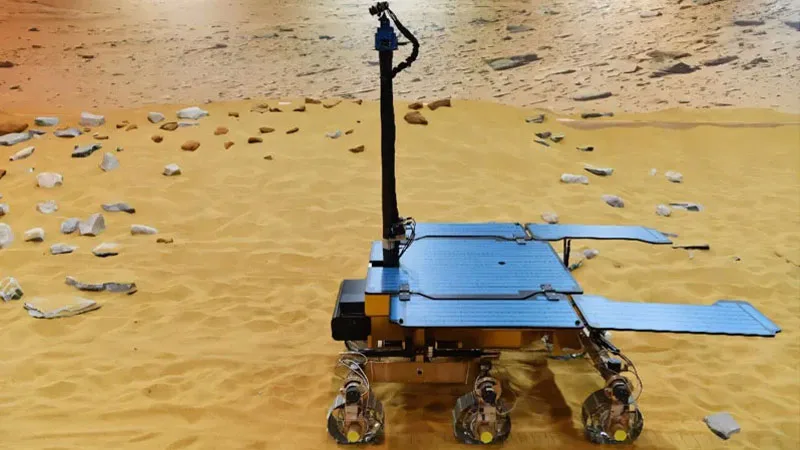
NASA has officially approved the launch of the European Rosalind Franklin rover, signaling a major milestone for international Mars exploration. The rover will be delivered to the Red Planet aboard a SpaceX launch vehicle, marking Europe’s inaugural successful attempt to deploy its own rover on Mars.
The Rosalind Franklin rover, named in honor of the pioneering British scientist known for her work on DNA, has experienced significant delays and shifting timelines over the past years. Now integrated into NASA’s launch schedule, the rover is slated to join the ExoMars program, a collaborative effort spearheaded by the European Space Agency (ESA) and Roscosmos.
Its mission focuses on astrobiology, with sophisticated instruments designed to probe beneath the Martian surface, reaching depths up to two meters. This capability will enable the rover to detect organic molecules and other potential biosignatures that might reveal evidence of past life on Mars, an exploration frontier that previous rovers could only approach superficially.
The approval of Rosalind Franklin’s launch represents a significant step forward in planetary science and underscores the deepening cooperation between NASA and international partners. Utilizing SpaceX’s launch system reflects the growing role of commercial aerospace companies in facilitating complex interplanetary missions.
While exact launch timelines and mission parameters remain subject to updates, the integration of Rosalind Franklin into NASA’s mission catalog is seen as a major achievement after years of overcoming technical and political hurdles. The mission’s success could open new pathways for future European-led initiatives in space exploration, particularly among robotic missions targeting the search for life beyond Earth.
NASA has greenlit the launch of the European Rosalind Franklin rover on a SpaceX mission, marking Europe’s first rover deployment to Mars.