App Store Sees Surge in New Apps Amid Growth of No-Code Platforms in Early 2026
July 21, 2026
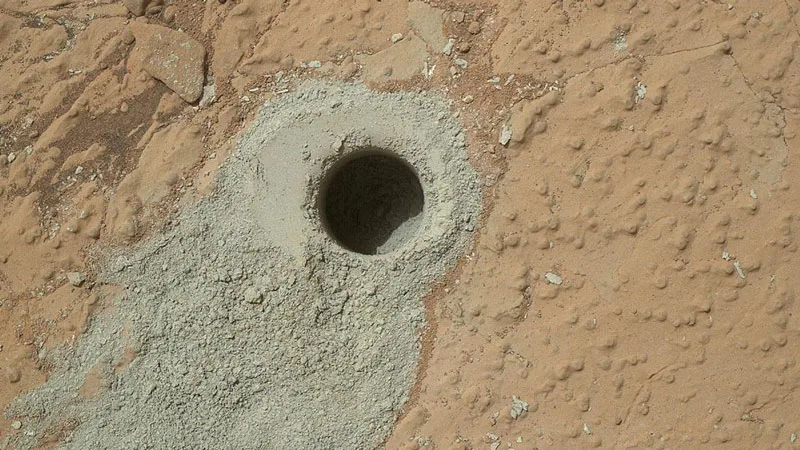
In a recent breakthrough, NASA’s Curiosity rover has detected long-chain alkanes embedded in ancient clay deposits within Mars’ Gale Crater. These organic molecules, containing 10 to 12 carbon atoms, were found in concentrations currently measuring between 30 and 50 parts per billion.
The samples analyzed by Curiosity come from some of the oldest sedimentary rocks on Mars, suggesting that these organic compounds have survived for millions of years. Scientists have studied the data extensively and indicate that the abundance of these alkanes in the distant past was significantly higher than what is observed today.
The presence of such long-chain hydrocarbons, with concentrations that appeared considerably elevated in ancient times, poses a challenge. Researchers note that the levels of these organic molecules are difficult to explain solely through non-biological processes. This has led to considerations about whether microbial life or related biological activity could have played a role in their synthesis.
While the detection does not conclusively prove the existence of past life on Mars, it adds important context to the ongoing investigation into the planet’s habitability. The organic material Curiosity uncovered enriches the understanding of Mars’ chemical environment and supports the theory that the red planet may have once supported conditions favorable to living organisms.
This finding also underscores the capabilities of robotic planetary missions to gather detailed geochemical data remotely, enabling scientists to piece together Mars’ history and its potential for past life. Future missions will continue to build on such discoveries, targeting organic signatures and other biosignatures in greater detail.
Overall, the detection of these ancient alkanes in Gale Crater represents a significant step forward in planetary science and astrobiology, illustrating how organic compounds can persist on Mars and raising compelling questions about their origins.
NASA’s Curiosity rover discovered long-chain alkanes in Gale Crater clay, hinting at possible biological origins millions of years ago on Mars.