
App Store Sees Surge in New Apps Amid Growth of No-Code Platforms in Early 2026
July 21, 2026
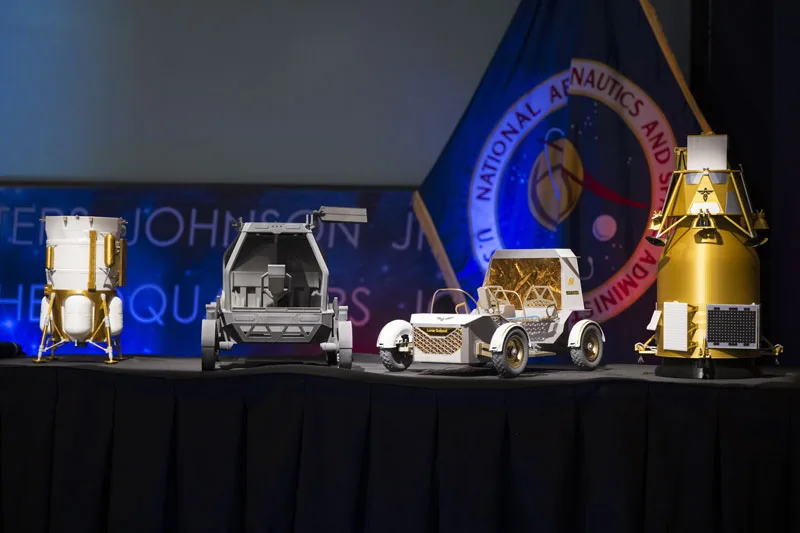
NASA is poised to advance its lunar ambitions this year by launching three missions that will lay the groundwork for a permanent human settlement on the Moon. The agency’s renewed lunar initiative emphasizes sustained human presence as a central objective in its exploration strategy.
The recent developments follow significant organizational changes within NASA. The agency’s new leader, billionaire Jared Isaacman, has prioritized streamlining operations and refocusing resources, responding to criticisms of past management regarding budget misallocation and setbacks within the Artemis program. Under his leadership, NASA has articulated a clear and uncompromising commitment to lunar exploration.
The three planned missions this year constitute the initial phase of NASA’s long-term vision for a lunar base. These undertakings are designed to establish essential infrastructure and scientific capabilities that will support continuous human activity on the Moon. They mark a shift from earlier, more exploratory missions toward building a sustainable presence beyond Earth.
While specific details on the missions’ payloads and timelines remain limited, these launches represent a crucial step in fulfilling NASA’s strategic goals set for the coming decade. By securing contracts and formalizing plans at the end of May 2026, NASA is signaling a new era focused on both scientific advancement and practical habitation on the lunar surface.
The renewed lunar push coincides with growing international interest in the Moon as a site for research, resource utilization, and a potential springboard for deeper space exploration. NASA’s efforts aim to maintain American leadership in this competitive arena by establishing foundational capabilities early in this decade.
As the agency progresses, the success of these initial missions will serve as important milestones. They will test technologies, evaluate lunar conditions for sustained human activity, and determine approaches to habitat construction and life support systems. Achieving these goals is critical not only for the lunar base initiative but also for broader human spaceflight ambitions.
NASA’s clear focus on the Moon signals a strategic pivot, aiming for long-term operational presence in space rather than short-term expeditionary missions. This direction aligns with growing recognition that lunar infrastructure could enable future missions to Mars and beyond, leveraging the Moon as both a laboratory and a logistical hub.
Though the financial and technical details remain under wraps, NASA’s endorsement of these missions underscores its intent to translate decades of exploration experience into permanent human footholds in space. The coming missions this year thus represent the first tangible steps toward realizing this vision, setting the stage for a new chapter in lunar exploration and human space habitation.
NASA is set to initiate three missions in 2026 as part of its plan to establish a permanent human base on the Moon.