Advancements in CFET Technology Promise Faster, Smaller, and More Reliable Semiconductor Transistors
July 21, 2026
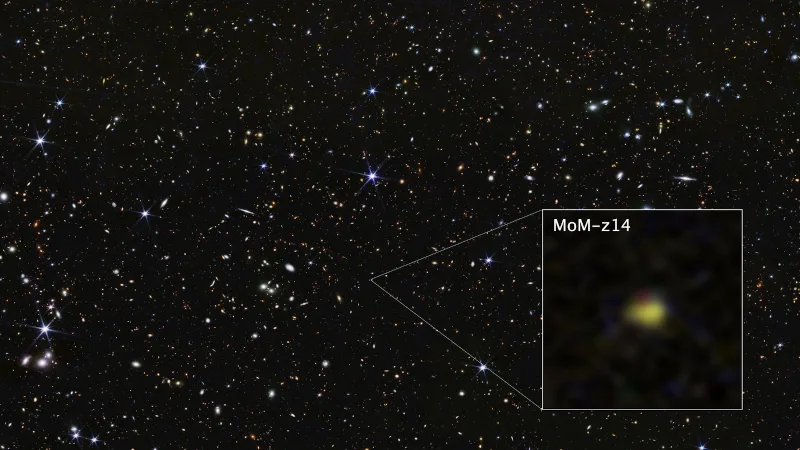
NASA is set to launch the Nancy Grace Roman Space Telescope (RST) into Earth orbit in September 2026, marking a significant milestone for space observation. Notably, the telescope’s deployment is scheduled approximately eight months ahead of the originally planned timeline. This new observatory is expected to produce an unprecedented volume of data, which will profoundly influence the scientific community’s computational demands.
During its operational lifetime, the RST will generate around 20,000 terabytes of data. This influx of detailed astronomical information will be complemented by continuous data streams from various other space- and ground-based observatories. The combined data throughput from these sources is driving a surge in demand for advanced computational tools capable of efficiently processing massive datasets.
Among these tools, graphics processing units (GPUs) have become increasingly essential. Originally designed for rendering graphics, GPUs excel at handling large-scale parallel computations, making them well-suited for the data analysis requirements of contemporary astronomy. The transition from traditional CPU-based methods to GPU-accelerated workflows enables researchers to analyze voluminous datasets more quickly and with greater efficiency.
Given the scale of data expected from the Nancy Grace Roman Telescope and accompanying observatories, scientists anticipate a heightened reliance on GPUs to accelerate data reduction, image processing, and complex simulations. This trend reflects a broader shift within the research community, where machine learning and AI algorithms, often optimized for GPU hardware, are becoming central to extracting insights from astronomical data.
The increased computational needs underscore both the challenges and opportunities in handling the next wave of space science data. Effective processing capabilities will be critical for unlocking the scientific potential of the RST, enabling studies related to dark energy, exoplanets, galaxy formation, and other frontier questions in astrophysics.
As demand for advanced GPUs grows alongside the volume of space observation data, collaborations among NASA, technology providers, and research institutions are expected to play a key role in ensuring that infrastructure keeps pace with scientific ambitions. While specific details on hardware partnerships or procurement strategies have not been disclosed, the implications for computational resource planning are significant.
Overall, the Nancy Grace Roman Telescope represents not only a leap forward in observational astronomy but also a catalyst for innovation in high-performance computing within the scientific community. The upcoming data deluge will push existing methods and hardware, prompting ongoing advances in both technology and methodology to meet the evolving needs of space science research.
NASA’s upcoming Nancy Grace Roman Telescope will deliver vast datasets, accelerating GPU usage among scientists handling massive astronomical data.