Advancements in CFET Technology Promise Faster, Smaller, and More Reliable Semiconductor Transistors
July 21, 2026
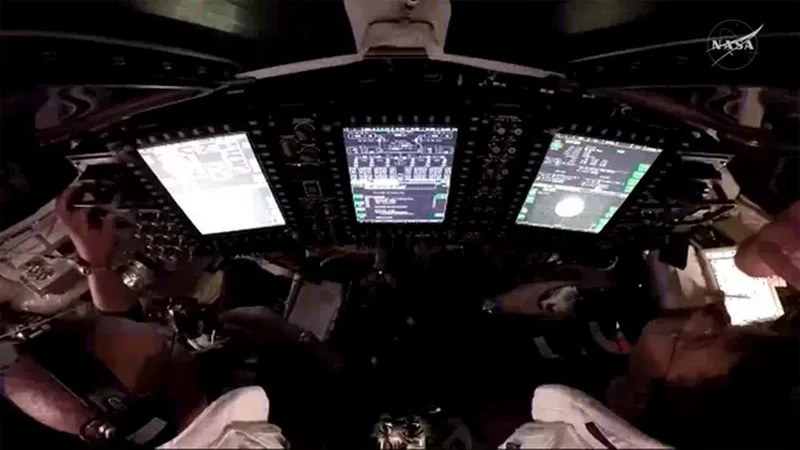
NASA’s Artemis II mission, which marks a significant milestone in the agency’s plans for lunar exploration, recently experienced an unexpected software issue aboard the Orion spacecraft. During a live broadcast, viewers observed a moment where astronauts aboard the vessel encountered trouble with the Microsoft Outlook application.
Space enthusiasts tuning into the live feed noticed an astronaut expressing confusion as he reached out to mission control for assistance. The astronaut reported having two instances of Microsoft Outlook open on the ship’s onboard computer systems, neither of which was functioning properly. This unusual situation provided a rare glimpse into the challenges of managing everyday software in the demanding environment of space.
The malfunction occurred while the spacecraft was en route to the Moon, highlighting that even cutting-edge space missions can face issues similar to those encountered in terrestrial computing. The presence of multiple instances of the same application leading to operational disruptions underscores how complex software ecosystems remain effective only when carefully maintained.
Microsoft Outlook, a staple in communication and scheduling tools worldwide, plays an integral role in the daily operations and communication coordination among astronauts and ground control. The failure of the application during a critical phase of the mission raised awareness about the reliance on standard software programs in space avionics and the importance of robust, reliable digital tools in extraterrestrial missions.
While mission control quickly responded to the astronaut’s request, the incident illuminated the broader challenges of software management aboard spacecraft. Traditional commercial software, when adapted for space use, must be carefully configured and tested to withstand unique operational constraints, ranging from connectivity limitations to hardware constraints and real-time performance requirements.
Instances like this offer valuable feedback for NASA and Microsoft alike, emphasizing the need for continued collaboration to enhance software resilience and troubleshoot potential vulnerabilities before future missions. Ensuring that communication platforms remain fully operational is critical as space travel looks toward longer-duration and more complex endeavors.
The Artemis II mission, following up on the uncrewed Artemis I flight, continues to demonstrate both the extraordinary capabilities and the everyday difficulties faced during human spaceflight. The incident with Outlook serves as a reminder that even in advanced technological settings, familiar software issues can arise, requiring rapid intervention and problem-solving skills from astronauts and support teams on the ground.
NASA has yet to disclose detailed comments about the software anomaly or specific steps taken to resolve the Outlook failures during flight. However, experts suggest that the lessons learned from such events will inform future updates to onboard systems and software protocols, strengthening the overall mission reliability.
As space agencies increase their use of commercial and off-the-shelf software components, incidents like the one on the Orion spacecraft highlight the continual need for rigorous testing and adaptation of software solutions to meet the stringent requirements of spaceflight.
The Artemis program remains a flagship initiative for NASA’s return to lunar exploration, aiming to establish a sustainable human presence on the Moon while preparing for future crewed missions to Mars. Ensuring the dependability of all onboard systems, from hardware to software, will be key to these pioneering efforts.
During the Artemis II mission, astronauts aboard NASA’s Orion faced a software hiccup with two non-functional Microsoft Outlook apps.