App Store Sees Surge in New Apps Amid Growth of No-Code Platforms in Early 2026
July 21, 2026
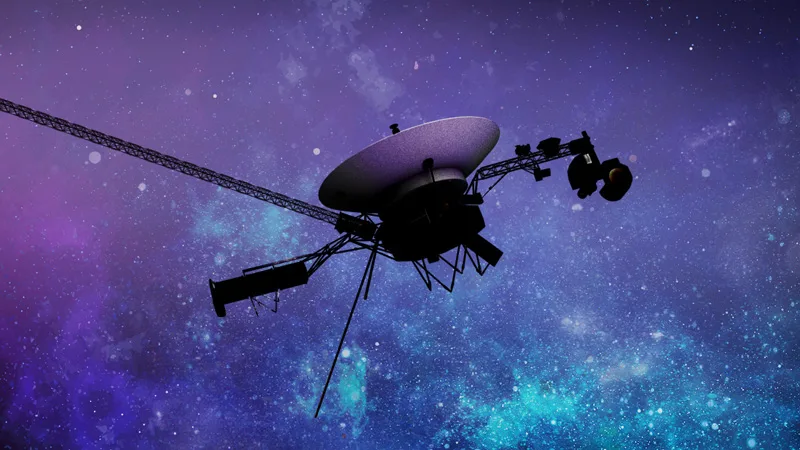
On April 17, 2026, engineers at NASA’s Jet Propulsion Laboratory (JPL) in Southern California turned off one of the scientific instruments aboard Voyager 1. The device, tasked with measuring low-energy charged particles, was powered down as part of an energy conservation strategy to prolong the spacecraft’s operational life.
Voyager 1, launched in 1977, has been traveling through interstellar space for several decades, sending valuable data back to Earth. As the spacecraft’s nuclear power source steadily depletes, mission engineers must carefully manage available energy to maintain critical systems and instruments.
The instrument in question, known as the Low-Energy Charged Particle (LECP) detector, has contributed important information about charged particles in the space environment beyond our solar system. However, with limited power supplies, JPL engineers decided to disable the LECP experiment to save energy for essential functions and other instruments that are still operational.
This decision highlights the ongoing challenges faced in maintaining deep-space missions, particularly those relying on aging power systems. By shutting down non-essential instruments, NASA aims to maximize the scientific return from Voyager 1 while it continues its unprecedented journey through the cosmos.
Despite this adjustment, Voyager 1 remains active and continues to transmit data from its position outside the heliosphere. The mission has already exceeded all expectations for longevity and continues to provide unique insights into the interstellar environment.
As the spacecraft ventures further into uncharted space, energy management and system prioritization remain crucial to sustaining this historic mission for as long as possible.
To conserve power, NASA has disabled a scientific instrument on Voyager 1, ensuring the spacecraft continues its journey through interstellar space.