App Store Sees Surge in New Apps Amid Growth of No-Code Platforms in Early 2026
July 21, 2026
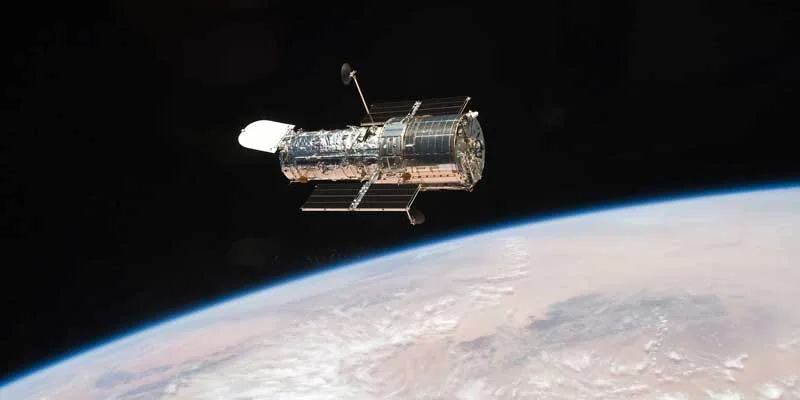
As NASA prepares for the launch of its Roman Space Telescope, scheduled for later this year, the mission signals a continuation and potential expansion of the legacy established by the decades-old Hubble Space Telescope. Despite the emergence of new observatories such as the James Webb Space Telescope and Roman, the Hubble remains an indispensable resource for astronomers worldwide.
Since its deployment, the Hubble Space Telescope has revolutionized space observation with more than four decades of invaluable data collection. Its unique capabilities have made it a cornerstone in the field of astronomy, providing insights that remain difficult to replicate even with newer instruments.
The arrival of Roman, with its advanced technology and specialized mission goals, introduces fresh opportunities for expanding our understanding of the cosmos. However, rather than signaling a decommissioning or downsizing of Hubble’s operations, the launch of Roman is set to complement the veteran telescope’s work.
The scientific community faces ongoing challenges, including budget constraints and prioritizing the utilization of multiple high-profile space observatories. Within this context, strategies are being developed to leverage the distinct strengths of each telescope. Roman’s capabilities are expected to harmonize with Hubble’s, enabling broader and more detailed astronomical investigations.
This approach ensures that Hubble’s mission will not only persist but may also see its scope broadened. The complementary use of both telescopes could facilitate more comprehensive surveys and refined follow-up observations, enhancing research outcomes across various domains in space science.
NASA’s commitment to sustaining Hubble’s operations alongside the deployment of new instruments like Roman underscores the value placed on maximizing scientific return. This dual-telescope strategy highlights an evolving paradigm in space-based astronomy, focusing on integration and cooperative use rather than replacement.
As the Roman Space Telescope moves closer to its launch, anticipation grows within the scientific community about the collaborative potential it introduces. The continuation of Hubble’s crucial work, supported and expanded by Roman’s advanced capabilities, promises to enrich the catalog of cosmic knowledge available to researchers for years to come.
NASA’s upcoming Roman Space Telescope will enhance astronomical research without ending the Hubble Space Telescope’s valuable mission.