App Store Sees Surge in New Apps Amid Growth of No-Code Platforms in Early 2026
July 21, 2026
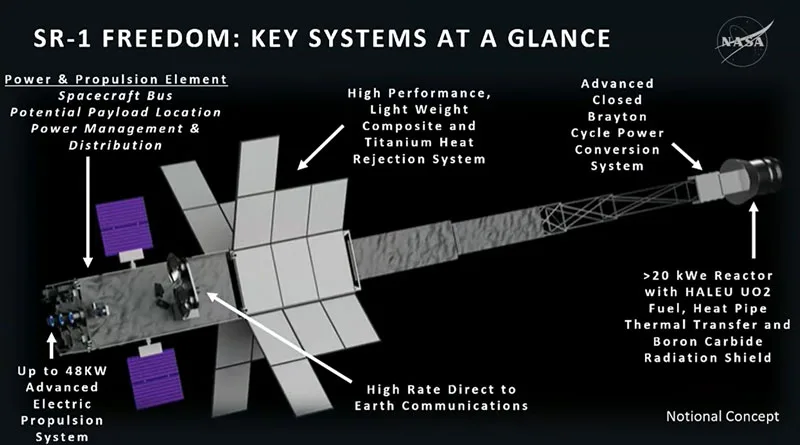
NASA is taking unprecedented steps to expedite the development of a nuclear-powered spacecraft designed for a Mars mission targeted for launch by the end of 2028. The agency recently announced plans to revise its traditional research and development protocols in order to meet the demanding project timeline.
The use of a nuclear thermal rocket engine represents a transformative advancement in space propulsion technology, providing the potential for significantly reduced travel times to the Red Planet. Although this innovative technology promises to enhance mission capabilities, adhering to NASA’s conventional development and testing procedures posed a challenge to the scheduled deployment.
To address the tight timeline, NASA officials revealed that certain stages of the spacecraft’s research, development, and validation would be simplified or adjusted. This approach aims to compress the project duration to approximately two and a half years—an extraordinarily rapid milestone in the history of aerospace engineering.
The decision to streamline development steps reflects the agency’s commitment to pioneering space exploration technologies while adapting to ambitious mission deadlines. By optimizing workflows, NASA anticipates maintaining sufficient rigor to ensure the spacecraft’s safety and performance without the extensive delays typically associated with groundbreaking aerospace projects.
The nuclear propulsion system under development is expected to deliver higher efficiency and greater thrust compared to conventional chemical rockets, making it a key enabler for deep space exploration beyond Earth’s orbit. Successfully integrating this technology into a Mars-bound vessel would mark a significant achievement, potentially setting a new standard for long-duration spaceflight.
While specific technical details, budgets, and testing outcomes have not been publicly disclosed, NASA’s strategic shift underscores an evolving approach to managing complex technological challenges in space missions. The agency’s willingness to modify established protocols demonstrates the increasing urgency and ambition of upcoming interplanetary exploration efforts.
The 2028 launch date represents a pivotal moment, as few space agencies have publicly committed to deploying nuclear thermal propulsion within such a compressed timeframe. If successful, this mission could pave the way for enhanced human and robotic exploration capabilities across the solar system.
NASA accelerates development of a nuclear-powered spacecraft to meet the ambitious 2028 Mars launch deadline by simplifying research and testing stages.