Nvidia Increases Prices Across Entire Jetson Hardware Lineup
July 22, 2026
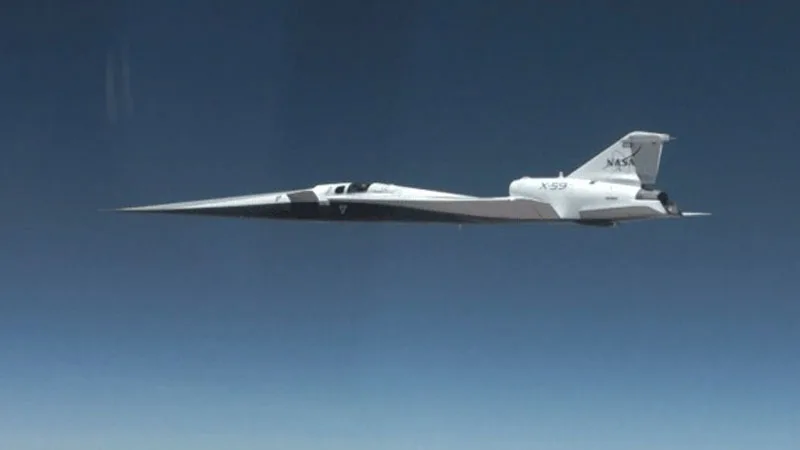
On June 5, 2026, NASA achieved a significant breakthrough in supersonic aviation by successfully pushing its experimental X-59 aircraft beyond the speed of sound for the first time. This milestone test flight saw the aircraft climb to an altitude of approximately 13,228 meters (43,400 feet) before accelerating to Mach 1.1, equivalent to 1,148 kilometers per hour.
The X-59 is designed to demonstrate technologies that dramatically reduce the loud sonic booms traditionally associated with supersonic flight. During the test, the aircraft’s noise levels were so low that it was effectively inaudible even when flying alongside an F-15 fighter jet used to accompany and monitor the test flight.
This initial supersonic run is a pivotal step in NASA’s goal to develop commercial supersonic aircraft capable of flying over populated areas without disturbing communities below. The agency plans to continue testing by increasing the X-59’s cruising speed to Mach 1.4, further refining the quiet flight technologies.
A key objective of the program is to provide data and prove that the reduced noise signature could lead to regulatory changes allowing supersonic flight over land, which has been heavily restricted due to the disruptive sonic booms caused by previous generations of aircraft.
The X-59 initiative reflects NASA’s commitment to advancing aerospace innovation, aiming to enable a new era of faster, quieter air travel. Moving forward, the research team will conduct additional flights at higher speeds and evaluate how the quiet supersonic technology performs in real-world, inhabited environments.
By successfully demonstrating the quiet supersonic concept, NASA hopes to influence policy and commercial industry standards, potentially revitalizing the supersonic transport market with aircraft that can travel at speeds exceeding the speed of sound without the accompanying noise issues of the past.
The X-59 test flight represents a blend of cutting-edge aerodynamics, noise reduction engineering, and precise flight testing. The results from ongoing and future operations will help shape the future landscape of supersonic aviation, making it a more viable and community-friendly mode of air travel.
NASA’s experimental X-59 aircraft reached supersonic speeds for the first time, marking a key milestone in quiet supersonic flight development.