App Store Sees Surge in New Apps Amid Growth of No-Code Platforms in Early 2026
July 21, 2026
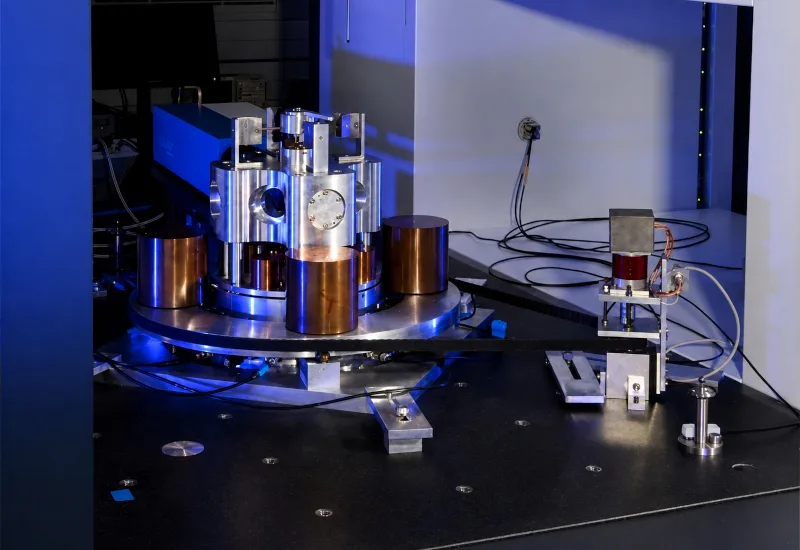
The National Institute of Standards and Technology (NIST) in the United States has completed a comprehensive, decade-long effort to measure the gravitational constant, denoted as G. This fundamental physical constant governs the strength of gravitational attraction in Newton’s law of universal gravitation and remains one of the most challenging constants to determine accurately.
Despite the extended duration and meticulous approach, the value obtained by NIST scientists differs notably from previous measurements conducted by international research teams, including a prominent French experiment. Additionally, the new value does not align with the internationally accepted reference value typically used in scientific calculations and standards.
The persistent inconsistency between various measurements of the gravitational constant has been a longstanding issue in fundamental physics. NIST’s latest findings reaffirm the difficulty in achieving consensus on this crucial constant, even with advanced experimental techniques and prolonged observation periods.
Interestingly, the NIST team’s work identified error sources that had not been previously accounted for in other measurements. These newly recognized factors introduce additional uncertainty and suggest that some systematic effects influencing prior experiments might have gone unnoticed. Understanding and mitigating such errors is vital for refining the accuracy of G, which affects calculations in astrophysics, geophysics, and metrology.
While the precise measurement of G remains elusive, the NIST experiment contributes important insights to the scientific community. It underscores the necessity for continued innovation in experimental design and cross-validation among international efforts to narrow down the true value of this cornerstone constant in physics.
Further research and collaboration will be essential to resolve these discrepancies and to improve the reliability of gravitational constant measurements. This endeavor holds significant implications for improving fundamental physical models and enhancing standards used across scientific disciplines.
NIST’s 10-year experiment to measure the gravitational constant G diverges from prior results, uncovering previously unknown error factors in precision measurements.