Advancements in CFET Technology Promise Faster, Smaller, and More Reliable Semiconductor Transistors
July 21, 2026
Nvidia has revealed significant advancements in its chip design methodology through the integration of artificial intelligence, drastically reducing the time required for complex engineering tasks. The company employs AI at various stages within the internal chip development pipeline, enabling a speed and efficiency boost that condenses what previously took months into mere overnight progress.
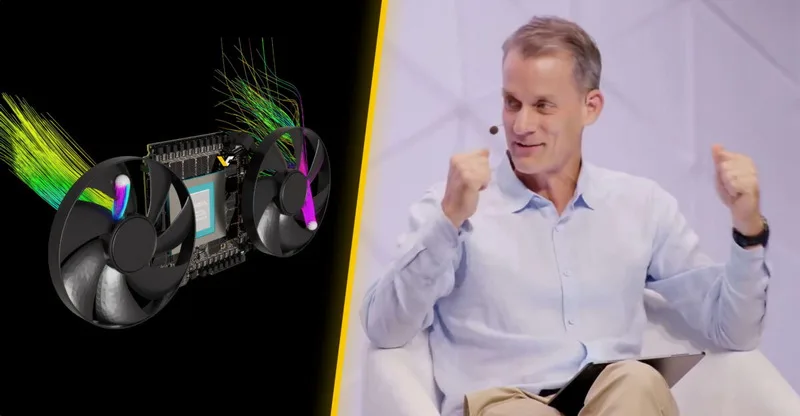
<pDuring a discussion at the GTC conference with Google’s chief scientist Jeff Dean, Nvidia’s chief scientist Bill Dally outlined how the company utilizes AI to tackle several critical elements of chip engineering. AI plays a role in exploring design options, managing the standard cell library, as well as identifying and resolving errors. Additionally, the AI systems contribute to verification processes that ensure chip designs meet rigorous quality standards.
While these AI-driven interventions deliver notable improvements in design cycle time, Nvidia emphasizes that the industry has not yet reached fully automated chip design. Human engineers continue to play a vital role in overseeing complex decisions and the overarching design strategy, underscoring that the integration of AI is currently augmenting rather than replacing traditional engineering workflows.
The acceleration of chip development enabled by AI reflects broader trends in semiconductor manufacturing, where AI tools are increasingly applied to optimize design, manufacturing, and quality assurance tasks. Nvidia’s experience illustrates how targeted AI application can enhance efficiency without compromising the precision required for high-performance chip production.
As chip complexity grows and market demands intensify, companies like Nvidia are exploring advanced AI-driven solutions to maintain competitive advantage and respond to rapid technological evolution. While fully autonomous design solutions remain a future goal, these developments mark an important step toward smarter, faster semiconductor innovation.
Further details on the scope of AI’s impact on Nvidia’s design workflows or specific performance metrics were not disclosed. However, the company’s openness about the role of AI underscores a strategic commitment to integrating advanced computational techniques into semiconductor engineering processes.
Nvidia uses AI to speed up key chip design tasks, cutting months of engineering work to overnight advancements, though full automation remains distant.