Advancements in CFET Technology Promise Faster, Smaller, and More Reliable Semiconductor Transistors
July 21, 2026
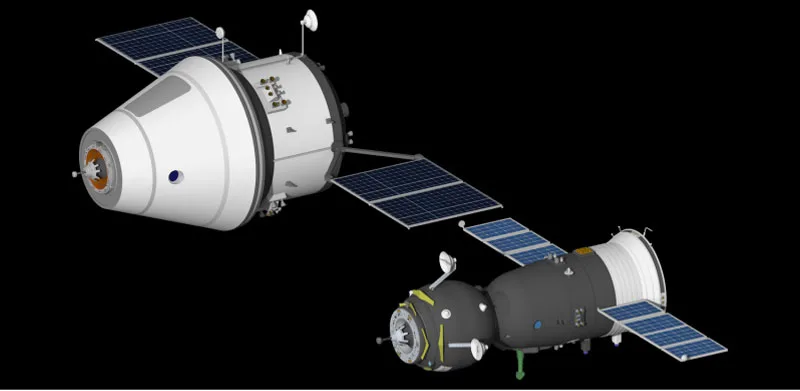
The first crewed flight of Russia’s new generation spacecraft, known as “Oryol,” has been postponed to 2028. This announcement was made public by Sergey Krikalev, the Deputy General Director for Manned Programs at Roscosmos, during a panel discussion on modern management technologies in space held at the Russian Presidential Academy of National Economy and Public Administration (RANEPA).
The “Oryol” spacecraft, sometimes referred to by its English translation “Eagle,” represents Russia’s bid to develop a next-generation manned vehicle intended to supersede the venerable Soyuz capsule. The new craft is designed to enable long-duration missions and expand human spaceflight capabilities for Russia.
Originally, the maiden crewed launch of the “Oryol” craft had been anticipated earlier, but schedule revisions have now pushed the mission to 2028. While specific reasons for the delay were not detailed during the briefing, the announcement underscores the challenges Russia faces in advancing its piloted spaceflight programs amidst technological, economic, or geopolitical factors.
Sergey Krikalev, a veteran cosmonaut and prominent figure within the Russian space sector, provided the update during a specialized discussion on leadership and strategy in space operations. The event took place within an academic setting focusing on cutting-edge organizational and administrative methods tailored to the high stakes of space exploration.
This delay reflects broader trends within the global space industry where development of next-generation crewed vehicles often experiences setbacks due to the complexity of design, testing, and certification. Russia’s space agency continues to focus efforts on developing reliable spacecraft that can sustain human presence in low Earth orbit and potentially support future missions beyond Earth.
The new timeline places the “Oryol” spacecraft into a competitive era marked by multiple nations accelerating their crewed space programs. While in orbit currently, the Soyuz remains a mainstay for Russian manned spaceflight. The introduction of “Oryol” is expected to modernize capabilities, including improved life-support systems, enhanced safety features, and greater mission flexibility.
Further details on the program’s progress, technical specifications, or mission objectives are anticipated as Roscosmos continues with development. No additional information regarding launch vehicles, crew assignments, or mission profile has been disclosed at this time.
As Russia positions itself for the next stage of space exploration, the postponement of the “Oryol” first crewed flight highlights the intricate challenges of innovating within the demanding environment of human spaceflight.
The inaugural crewed mission of Russia’s next-generation spacecraft ‘Oryol’ is now scheduled for 2028, according to Roscosmos leadership.