Advancements in CFET Technology Promise Faster, Smaller, and More Reliable Semiconductor Transistors
July 21, 2026
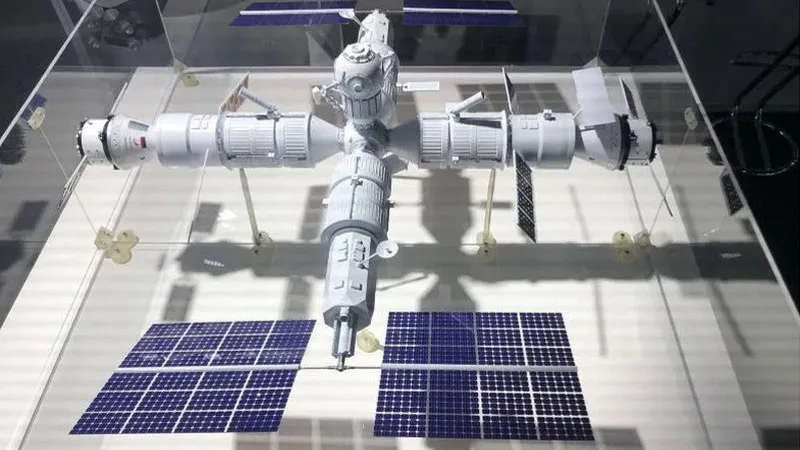
Plans for the deployment of Russia’s new space station, a replacement for the International Space Station (ISS), have been postponed to 2028. The announcement was made by Denis Manturov, First Deputy Prime Minister of Russia, during a February 19, 2026 forum in Yekaterinburg hosted by the political party United Russia.
Originally expected to move ahead sooner, the timeline adjustment highlights challenges facing Russia’s space infrastructure efforts. Manturov emphasized that the Russian Orbital Station (ROS) is designed to become a symbol of national achievement and a pivotal platform for advancing deep space exploration initiatives.
The ROS is envisioned not only as a domestic project focused on independent orbital capabilities but also as a foundation supporting future ventures, including the establishment of a Russian lunar base. This aligns with Moscow’s broader objectives of extending its human presence beyond Earth’s orbit.
Despite the postponement, the station is expected to consolidate Russia’s strategic position in space activities, particularly in light of the aging ISS, whose collaborative international mission is approaching its later operational years. The delay gives the Russian space program additional time to refine technical and logistical aspects to ensure the station’s successful launch and deployment.
The announcement during a high-profile political forum underscores the importance placed on the orbital station as a matter of state interest and pride. However, detailed technical specifications, funding arrangements, and project milestones remain closely guarded or pending further release.
As the global space landscape evolves, Russia continues to prioritize its access and capabilities in orbit. The ROS project reflects this commitment against the backdrop of intensifying competition and cooperation in space exploration.
Russia’s plan to deploy its new orbital station, seen as a national pride project, is now postponed to 2028 amid development delays.