
Vivo X300 E Launches Soon with Zeiss Optics and Massive 7200mAh Battery
July 20, 2026
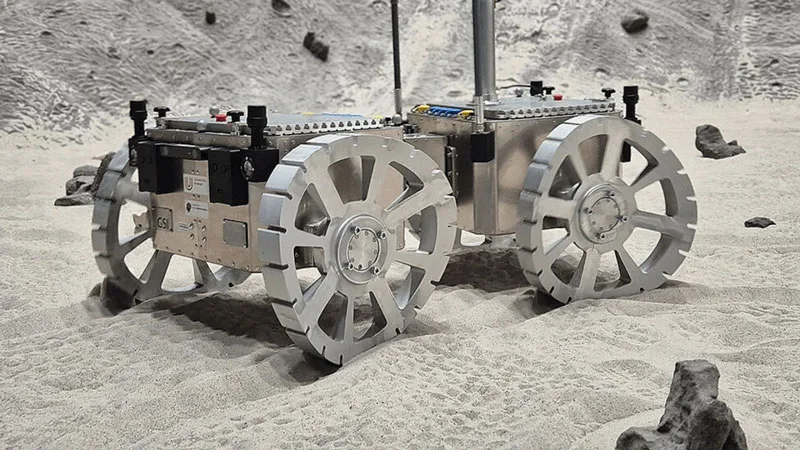
Scientists have turned to nature for inspiration in tackling one of the persistent challenges in planetary exploration: rover mobility across sandy, unstable surfaces. A small lizard native to the Sahara Desert has provided a novel concept that German researchers have adapted into a new wheel design aimed at preventing Mars rovers from getting stuck in soft terrain.
The Saharan lizard exhibits a unique locomotion method well-suited to its harsh desert environment. By studying this creature’s movement, scientists observed a distinctive pattern that distributes pressure dynamically across the surface it traverses. Mimicking these natural mechanics, German engineers devised wheels capable of tracing a figure-eight path while the rover moves.
This pattern of motion simultaneously applies both longitudinal and lateral pressure to the ground — a significant improvement over conventional wheels that exert force primarily in one direction. Such multidirectional pressure helps reduce slippage and prevents the vehicle from becoming bogged down in loose sand, a common issue faced by exploratory rovers on Mars and other extraterrestrial bodies.
The development draws on bio-inspired engineering to enhance the rover’s ability to navigate diverse and challenging landscapes that are prone to causing immobilization. This advance could extend the operational range and reliability of future missions on the Martian surface, where sand dunes and fine particulate matter often restrict mobility.
While detailed specifications regarding the wheel’s construction or implementation timeline have not been disclosed, this innovation marks a promising step toward more adaptable and resilient rover technology. The research highlights how studying natural adaptations in Earth’s extreme environments continues to influence the design of equipment for space exploration.
The adoption of this newly engineered wheel concept could mitigate operational risks and improve mission success rates by enabling rovers to traverse difficult terrains with greater stability and efficiency. Future testing and integration into rover prototypes will determine its practical performance in simulated or actual extraterrestrial conditions.
German researchers developed innovative Mars rover wheels inspired by a Saharan lizard, enhancing movement on sandy and challenging terrain.